


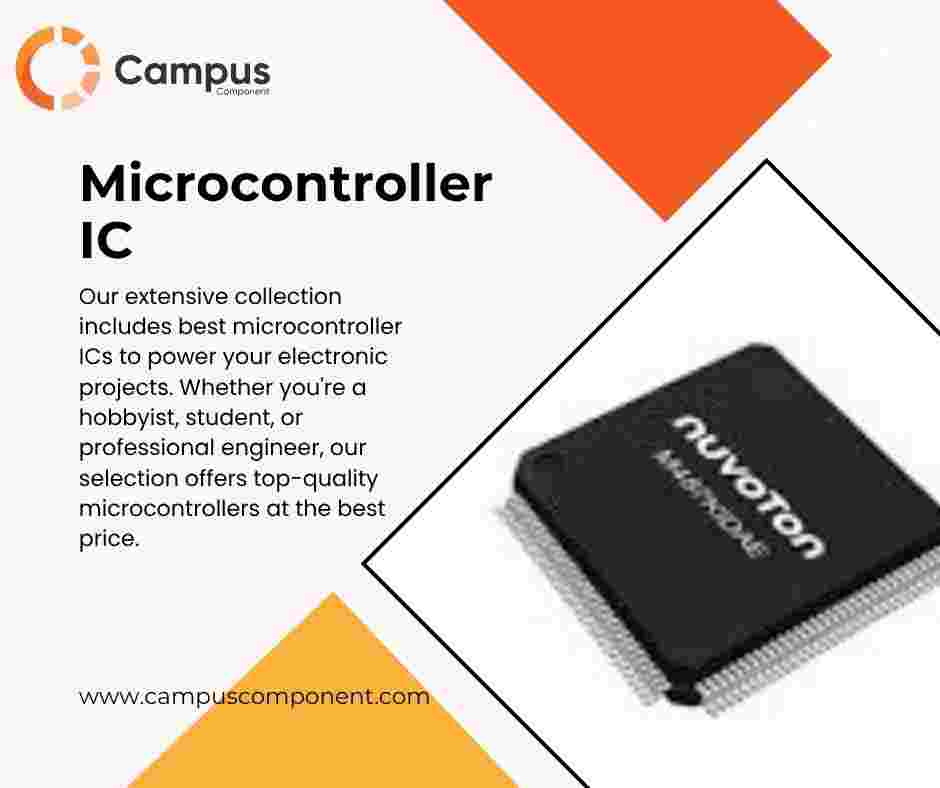
A Microcontroller IC is the heart of modern electronic devices, driving functionality, automation, and intelligence across numerous industries. From home appliances and automotive systems to IoT-enabled devices, these compact integrated circuits manage and control a wide variety of tasks. They combine a processor, memory, and input/output peripherals within a single chip, making them essential for efficient and cost-effective designs. As technology advances, selecting the best microcontroller for IoT applications has become a crucial decision for engineers and product designers. Campus Component provides a wide range of microcontroller ICs to support every level of innovation.
Understanding What a Microcontroller IC Is
A microcontroller IC is a small computing device specifically designed for embedded systems. It operates as a self-contained system with a processor core (usually an ARM, AVR, or PIC architecture), memory units (RAM, ROM, Flash), and I/O interfaces integrated into a single chip. Unlike microprocessors that require external components, microcontrollers are compact and self-sufficient, making them ideal for space-constrained designs.
In essence, microcontrollers are the brains behind countless devices—whether it’s controlling temperature in an air conditioner, adjusting brightness in smart lighting, or managing data in IoT sensors. They execute predefined instructions and interact with their environment through sensors, actuators, and other peripherals.
Key Components of a Microcontroller IC
Every microcontroller IC contains core elements that enable it to perform a wide range of operations efficiently:
-
Central Processing Unit (CPU): The brain that interprets and executes program instructions.
-
Memory Units: Divided into RAM for temporary storage, ROM or Flash memory for permanent program storage.
-
Input/Output Ports: Allow communication between the microcontroller and external components like sensors, displays, and actuators.
-
Timers and Counters: Used for precise time management, event counting, and signal generation.
-
Communication Interfaces: Such as UART, SPI, I²C, and CAN, facilitating data exchange between multiple devices.
-
Analog to Digital Converters (ADC): Convert analog sensor signals into digital values for processing.
-
Power Management: Efficient voltage regulation to maintain consistent performance.
How Microcontroller ICs Work
Microcontroller ICs operate by following a sequence of programmed instructions stored in their internal memory. The CPU fetches, decodes, and executes these instructions to perform specific tasks. Inputs are received from sensors or user interactions, processed according to the program, and then used to control output devices such as motors, displays, or relays.
For example, in a smart thermostat, the microcontroller continuously reads temperature data, processes it, and adjusts the HVAC system to maintain the desired comfort level. This seamless coordination between input, processing, and output defines the fundamental operation of microcontrollers.
Applications of Microcontroller ICs
Microcontroller ICs play a vital role in almost every modern industry. Some common applications include:
-
Consumer Electronics: Televisions, washing machines, microwaves, and remote controls.
-
Automotive Systems: Engine control units, airbags, braking systems, and infotainment.
-
Industrial Automation: Robotics, conveyor systems, and process monitoring.
-
Healthcare Devices: Glucose meters, ECG monitors, and infusion pumps.
-
Internet of Things (IoT): Smart homes, wearable devices, and connected infrastructure.
-
Communication Systems: Routers, modems, and wireless transmitters.
Their versatility and adaptability make microcontrollers indispensable for both simple and complex tasks.
Advantages of Using Microcontroller ICs
Microcontroller ICs offer numerous benefits that make them ideal for embedded designs:
-
Compact Design: Integration of multiple components into a single chip reduces circuit complexity and size.
-
Cost Efficiency: Lower production and development costs compared to multi-chip solutions.
-
Low Power Consumption: Ideal for battery-operated and portable devices.
-
High Reliability: Fewer external components mean fewer failure points.
-
Ease of Programming: Wide support for programming languages like C and C++.
-
Real-Time Operation: Ability to handle multiple processes simultaneously with precise timing.
-
Scalability: Available in various configurations for diverse applications.
These benefits contribute to their dominance in industries focusing on automation, IoT, and digital innovation.
Choosing the Right Microcontroller IC
Selecting the appropriate microcontroller IC depends on several factors:
-
Application Requirements: Identify whether the device will perform basic control tasks or complex operations.
-
Performance Needs: Consider clock speed, memory size, and data processing capabilities.
-
Power Constraints: For portable devices, opt for low-power microcontrollers with sleep modes.
-
Peripheral Support: Ensure compatibility with required communication interfaces and sensor inputs.
-
Development Tools: Availability of IDEs, compilers, and debugging tools simplifies design and testing.
-
Cost and Availability: Choose reliable sources like Campus Component for high-quality and affordable ICs.
Choosing wisely ensures optimal performance and long-term reliability of your device.
Microcontroller ICs in IoT Applications
In the realm of IoT, microcontroller ICs serve as the core processors that connect the physical world to the digital ecosystem. They manage sensor data, perform edge processing, and communicate with cloud platforms. Popular microcontrollers for IoT applications include those from ARM, ESP, and Microchip, offering Wi-Fi, Bluetooth, or LoRa connectivity.
For instance, an IoT-based smart irrigation system uses a microcontroller to read soil moisture levels and automatically control water valves. This minimizes human intervention while improving resource efficiency. Such use cases highlight the indispensable role of microcontrollers in enabling smart solutions.
Latest Trends in Microcontroller IC Technology
The evolution of microcontroller ICs continues to accelerate with trends focusing on higher integration, faster processing, and enhanced energy efficiency. Some notable advancements include:
-
AI-Enabled Microcontrollers: Integration of AI accelerators for real-time decision-making.
-
Ultra-Low-Power MCUs: Designed for energy harvesting and extended battery life.
-
Security-Focused Chips: Incorporating hardware-based encryption for IoT data protection.
-
Wireless Connectivity: Built-in modules for Bluetooth, Zigbee, and Wi-Fi.
-
Edge Computing Integration: Allowing devices to process data locally, reducing cloud dependency.
These innovations are driving the future of smart, connected, and autonomous systems.
Why Choose Campus Component for Microcontroller ICs
Campus Component stands as a trusted supplier of high-quality electronic components, including a vast selection of microcontroller ICs from globally recognized brands. They ensure authenticity, competitive pricing, and timely delivery, making them a reliable partner for students, engineers, and manufacturers alike.
Whether you’re designing a small DIY project or developing a large-scale industrial system, Campus Component offers products that cater to your specific needs. Their technical support and wide inventory ensure that your innovations stay ahead of the curve.
Conclusion
Microcontroller ICs form the foundation of modern electronics, offering intelligence, control, and efficiency in a compact package. As industries continue to embrace automation and IoT, the demand for powerful yet energy-efficient microcontrollers will only grow. By choosing the right IC and a dependable supplier like Campus Component, innovators can turn ideas into reality with confidence and precision.


 English
 العربية
 Français
 Español
 Português
 Deutsch
 Türkçe
 Nederlands
 Italiano
 Русский
 Română
 Português
 Ελληνικά