• Communication Services: Powering Global Digital Connectivity
    Introduction – Communication Services Overview

    The Communication Services sector plays a pivotal role in enabling global connectivity by facilitating voice, data, video, and digital communication across individuals, enterprises, and governments. This category encompasses telecommunications operators, internet service providers, cloud communication platforms, digital messaging services, media distribution networks, and over-the-top (OTT) service providers. With rapid digitalization, the sector has evolved beyond traditional voice services to include broadband connectivity, 5G networks, cloud-based communication platforms, and integrated enterprise solutions.

    The growing reliance on mobile internet, video streaming, digital payments, remote working, and IoT applications has significantly increased the demand for robust and scalable communication infrastructure. As a result, communication services have become a core component of economic development, technological advancement, and digital inclusion worldwide.

    Read More: https://www.swotreports.com/market-analysis/communication-services

    Company Introduction (Category Perspective)

    Companies operating within the Communication Services category range from large multinational telecom operators to specialized cloud communication and digital media service providers. These companies focus on building and managing communication infrastructure, delivering connectivity services, and offering digital platforms that enable seamless interaction across devices and geographies.

    Leading players typically operate extensive network infrastructures, including mobile networks (4G/5G), fiber-optic broadband, satellite communication systems, and cloud-based platforms. Their business models often combine consumer services, enterprise solutions, and wholesale connectivity, allowing them to serve diverse customer segments while maintaining recurring revenue streams.

    Recent Company Developments and Industry Updates

    In recent years, the Communication Services sector has witnessed significant strategic developments:

    Network Expansion and Modernization: Telecom operators continue to invest heavily in 5G deployment, fiber broadband expansion, and network virtualization to enhance speed, capacity, and reliability.
    Shift Toward Digital and Cloud Services: Companies are increasingly expanding their portfolios to include cloud communication platforms (CPaaS), unified communications, and enterprise messaging solutions.
    Strategic Partnerships and Acquisitions: Collaborations with cloud providers, technology firms, and content platforms are being pursued to strengthen service offerings and accelerate innovation.
    Focus on Customer Experience: Service providers are adopting AI-driven analytics, automation, and digital self-service platforms to improve customer engagement and reduce churn.
    These developments reflect the industry’s transition from traditional telecom models toward digitally integrated communication ecosystems.

    Strategic Analysis Review – SWOT Analysis

    Strengths

    Essential infrastructure supporting economic and digital activities.
    Strong and recurring demand driven by data consumption and connectivity needs.
    Technological advancements such as 5G, fiber networks, and cloud platforms.
    Weaknesses

    High capital expenditure requirements for network deployment and maintenance.
    Dependence on regulatory frameworks and spectrum availability.
    Legacy systems in some markets limiting operational agility.
    Opportunities

    Rapid growth in mobile data usage, IoT, and enterprise cloud communications.
    Expansion of digital services such as video streaming, unified communications, and CPaaS.
    Increasing demand for high-speed connectivity in emerging and underserved markets.
    Threats

    Intense competition leading to pricing pressure and margin compression.
    Disruption from OTT players offering alternative communication services.
    Cybersecurity risks and data privacy concerns.
    Business Description and Key Products & Services

    Business Description

    Communication Services companies operate across multiple layers of the value chain, including infrastructure ownership, service delivery, and platform development. Their core objective is to enable reliable, secure, and scalable communication solutions for consumers and enterprises.

    Key Products and Services

    Mobile Communication Services: Voice, SMS, and mobile data services using 4G and 5G networks.
    Fixed Broadband Services: Fiber and DSL-based internet connectivity for homes and businesses.
    Cloud Communication Platforms (CPaaS): APIs for messaging, voice, video, and authentication services.
    Enterprise Solutions: Unified communications, managed connectivity, and collaboration tools.
    Digital and Media Services: OTT content, streaming platforms, and value-added digital services.
    Financial Analysis – Ten-Year Historical Overview

    Over the past decade, the Communication Services sector has demonstrated stable long-term growth, supported by rising data consumption and technological advancements. Key financial trends include:

    Revenue Stability with Digital Growth: While traditional voice revenues have declined, data services and digital platforms have driven overall revenue growth.
    Increasing Capital Expenditure: Significant investments in 4G/5G, fiber networks, and cloud infrastructure have characterized the sector’s financial structure.
    Margin Evolution: Operating margins have faced pressure due to competition and pricing challenges, partially offset by higher-margin digital and enterprise services.
    Shift in Revenue Mix: A growing share of revenues now comes from data, broadband, and enterprise solutions rather than legacy services.
    Overall, the sector’s financial performance reflects a transition toward more technology-driven, service-oriented business models.

    Competitors and Industry Analysis

    Competitive Landscape

    The Communication Services industry is highly competitive and fragmented, with players operating at global, regional, and local levels. Major multinational telecom operators compete on network quality, coverage, pricing, and service innovation, while smaller players and digital platforms focus on niche services and enterprise solutions.

    Industry Dynamics

    High Entry Barriers: Infrastructure costs and regulatory requirements limit new entrants in traditional telecom services.
    Technology-Driven Competition: Differentiation increasingly depends on network performance, digital capabilities, and customer experience.
    Convergence of Services: Telecom, cloud, and media services are converging, intensifying competition across traditional industry boundaries.
    Conclusion

    The Communication Services category continues to evolve as a foundational pillar of the global digital economy. Driven by rising data demand, technological innovation, and expanding digital services, the sector presents significant growth opportunities despite challenges such as competition, regulation, and high capital requirements. Companies that successfully adapt to digital transformation, invest in next-generation networks, and diversify into high-value services are expected to maintain long-term competitiveness in this dynamic industry.

    About Us:

    SWOT Reports is a leading provider of market research reports in Chemicals, Energy, Oil & Gas, Food & Beverage, Electronics & Semiconductors, Automotive, Telecommunication, Healthcare and Other industries.

    SWOT Reports, established in 2009 has 14+ years of experience and served 1800+ clients from 980+ companies operating in 54+ countries.

    Connect with us

    +91 630 95 25755

    [email protected]

    Read more at: https://www.swotreports.com/
    Communication Services: Powering Global Digital Connectivity Introduction – Communication Services Overview The Communication Services sector plays a pivotal role in enabling global connectivity by facilitating voice, data, video, and digital communication across individuals, enterprises, and governments. This category encompasses telecommunications operators, internet service providers, cloud communication platforms, digital messaging services, media distribution networks, and over-the-top (OTT) service providers. With rapid digitalization, the sector has evolved beyond traditional voice services to include broadband connectivity, 5G networks, cloud-based communication platforms, and integrated enterprise solutions. The growing reliance on mobile internet, video streaming, digital payments, remote working, and IoT applications has significantly increased the demand for robust and scalable communication infrastructure. As a result, communication services have become a core component of economic development, technological advancement, and digital inclusion worldwide. Read More: https://www.swotreports.com/market-analysis/communication-services Company Introduction (Category Perspective) Companies operating within the Communication Services category range from large multinational telecom operators to specialized cloud communication and digital media service providers. These companies focus on building and managing communication infrastructure, delivering connectivity services, and offering digital platforms that enable seamless interaction across devices and geographies. Leading players typically operate extensive network infrastructures, including mobile networks (4G/5G), fiber-optic broadband, satellite communication systems, and cloud-based platforms. Their business models often combine consumer services, enterprise solutions, and wholesale connectivity, allowing them to serve diverse customer segments while maintaining recurring revenue streams. Recent Company Developments and Industry Updates In recent years, the Communication Services sector has witnessed significant strategic developments: Network Expansion and Modernization: Telecom operators continue to invest heavily in 5G deployment, fiber broadband expansion, and network virtualization to enhance speed, capacity, and reliability. Shift Toward Digital and Cloud Services: Companies are increasingly expanding their portfolios to include cloud communication platforms (CPaaS), unified communications, and enterprise messaging solutions. Strategic Partnerships and Acquisitions: Collaborations with cloud providers, technology firms, and content platforms are being pursued to strengthen service offerings and accelerate innovation. Focus on Customer Experience: Service providers are adopting AI-driven analytics, automation, and digital self-service platforms to improve customer engagement and reduce churn. These developments reflect the industry’s transition from traditional telecom models toward digitally integrated communication ecosystems. Strategic Analysis Review – SWOT Analysis Strengths Essential infrastructure supporting economic and digital activities. Strong and recurring demand driven by data consumption and connectivity needs. Technological advancements such as 5G, fiber networks, and cloud platforms. Weaknesses High capital expenditure requirements for network deployment and maintenance. Dependence on regulatory frameworks and spectrum availability. Legacy systems in some markets limiting operational agility. Opportunities Rapid growth in mobile data usage, IoT, and enterprise cloud communications. Expansion of digital services such as video streaming, unified communications, and CPaaS. Increasing demand for high-speed connectivity in emerging and underserved markets. Threats Intense competition leading to pricing pressure and margin compression. Disruption from OTT players offering alternative communication services. Cybersecurity risks and data privacy concerns. Business Description and Key Products & Services Business Description Communication Services companies operate across multiple layers of the value chain, including infrastructure ownership, service delivery, and platform development. Their core objective is to enable reliable, secure, and scalable communication solutions for consumers and enterprises. Key Products and Services Mobile Communication Services: Voice, SMS, and mobile data services using 4G and 5G networks. Fixed Broadband Services: Fiber and DSL-based internet connectivity for homes and businesses. Cloud Communication Platforms (CPaaS): APIs for messaging, voice, video, and authentication services. Enterprise Solutions: Unified communications, managed connectivity, and collaboration tools. Digital and Media Services: OTT content, streaming platforms, and value-added digital services. Financial Analysis – Ten-Year Historical Overview Over the past decade, the Communication Services sector has demonstrated stable long-term growth, supported by rising data consumption and technological advancements. Key financial trends include: Revenue Stability with Digital Growth: While traditional voice revenues have declined, data services and digital platforms have driven overall revenue growth. Increasing Capital Expenditure: Significant investments in 4G/5G, fiber networks, and cloud infrastructure have characterized the sector’s financial structure. Margin Evolution: Operating margins have faced pressure due to competition and pricing challenges, partially offset by higher-margin digital and enterprise services. Shift in Revenue Mix: A growing share of revenues now comes from data, broadband, and enterprise solutions rather than legacy services. Overall, the sector’s financial performance reflects a transition toward more technology-driven, service-oriented business models. Competitors and Industry Analysis Competitive Landscape The Communication Services industry is highly competitive and fragmented, with players operating at global, regional, and local levels. Major multinational telecom operators compete on network quality, coverage, pricing, and service innovation, while smaller players and digital platforms focus on niche services and enterprise solutions. Industry Dynamics High Entry Barriers: Infrastructure costs and regulatory requirements limit new entrants in traditional telecom services. Technology-Driven Competition: Differentiation increasingly depends on network performance, digital capabilities, and customer experience. Convergence of Services: Telecom, cloud, and media services are converging, intensifying competition across traditional industry boundaries. Conclusion The Communication Services category continues to evolve as a foundational pillar of the global digital economy. Driven by rising data demand, technological innovation, and expanding digital services, the sector presents significant growth opportunities despite challenges such as competition, regulation, and high capital requirements. Companies that successfully adapt to digital transformation, invest in next-generation networks, and diversify into high-value services are expected to maintain long-term competitiveness in this dynamic industry. About Us: SWOT Reports is a leading provider of market research reports in Chemicals, Energy, Oil & Gas, Food & Beverage, Electronics & Semiconductors, Automotive, Telecommunication, Healthcare and Other industries. SWOT Reports, established in 2009 has 14+ years of experience and served 1800+ clients from 980+ companies operating in 54+ countries. Connect with us +91 630 95 25755 [email protected] Read more at: https://www.swotreports.com/
    WWW.SWOTREPORTS.COM
    Market Research reports, Advisory Company and Revenue Impact,Industry Reports
    Access our comprehensive industry reports for deep insights, market trends, and strategic analysis. Empower your business with our expert research and data
    0 Commentaires 0 Parts 80 Vue
  • Selecting the proper #Cable Manufacturer can be pivotal to the success of large-scale projects, whether it is for #infrastructure, #energy, #telecommunications, #mining, or #construction industries.

    Read More: https://www.linkedin.com/pulse/how-compare-cable-manufacturers-australia-large-scale-znergy-cable-daexf/
    Selecting the proper #Cable Manufacturer can be pivotal to the success of large-scale projects, whether it is for #infrastructure, #energy, #telecommunications, #mining, or #construction industries. Read More: https://www.linkedin.com/pulse/how-compare-cable-manufacturers-australia-large-scale-znergy-cable-daexf/
    0 Commentaires 0 Parts 651 Vue
  • Silicon Photonics Market Opportunities, Trend Analysis, and Forecast Insights (2025–2032)

    Silicon Photonics Market size was valued at USD 2.36 Billion in 2024 and the total Silicon Photonics revenue is expected to grow at a CAGR of 26.4% from 2024 to 2032, reaching nearly USD 15.38 Billion by 2032.

    Silicon Photonics Market Overview

    The Silicon Photonics Market is undergoing significant transformation, driven by advancing technologies, evolving customer preferences, and changing global economic conditions. Recent findings from Maximize Market Research (MMR) present an in-depth assessment of market movements, including shifts in pricing, consumption behaviour, industry structure, and competitive dynamics.

    This analysis delivers a comprehensive perspective of the entire market framework — highlighting the primary factors that propel growth, the challenges limiting expansion, the opportunities emerging across segments, and the innovations reshaping the industry. These insights empower companies to refine strategies, uncover new business possibilities, and enhance their long-term planning.

    Access Exclusive Market Insights – Request Your Free Sample Copy Today @ https://www.maximizemarketresearch.com/request-sample/2492/

    Silicon Photonics Market Scope and Methodology

    The Silicon Photonics Market Report from MMR provides a comprehensive evaluation of the sector’s challenges, emerging prospects, and growth drivers. It underscores major developments, technological advancements, and upcoming opportunities — offering strategic guidance for industry leaders and stakeholders.

    The study is grounded in extensive primary and secondary research, supported by trusted information from government records, corporate filings, industry specialists, and authenticated databases. Additional contextual insights are drawn from political, economic, and social assessments within secondary sources.

    Through a blend of qualitative analysis and quantitative data, MMR’s report delivers meaningful clarity on market dimensions, future outlook, competitive landscape, and regional market differences worldwide.

    Silicon Photonics Market Segmentation

    The Silicon Photonics Market is segmented to provide a detailed understanding of its various sub-markets and key opportunities. The segmentation analysis enables companies to identify growth potential within niche segments and align business strategies with evolving market trends.

    by Component Type

    Optical Interconnects
    Modulators
    Lasers
    Photodetectors
    Waveguides and Couplers
    Switches

    By Technology

    CMOS-based Silicon Photonics
    Non-CMOS-based Silicon Photonics

    By Application

    Data Communication and Networking
    Sensing and Imaging
    Quantum Computing

    By End-User Industry

    Telecommunications
    Data Centers
    Consumer Electronics
    Healthcare
    Automotive

    Explore the Full Scope of the Market – Get Your Complimentary Sample Copy Here @ https://www.maximizemarketresearch.com/request-sample/2492/

    Silicon Photonics Market Regional Insights

    The report provides a detailed regional analysis covering North America, Europe, Asia Pacific, South America, the Middle East, and Africa. Each region’s market dynamics are examined through the lens of local policies, economic development, infrastructure, and consumer behavior.

    This geographic breakdown allows readers to understand how regional factors influence overall market performance and investment opportunities. For instance, while North America continues to drive innovation, emerging economies in Asia Pacific are expected to show significant growth due to technological advancements and increasing industrialization.

    Key Players in the Silicon Photonics Market

    The competitive landscape of the Silicon Photonics Market features a blend of established global players and innovative new entrants. These companies are adopting strategies such as mergers, partnerships, product launches, and technological integration to enhance their market positions.

    1. Intel cooperation
    2. Luxtera
    3. Cisco Systems Inc.
    4. Finisar
    5. GlobalFoundries
    6. Juniper Networks
    7. Ciena
    8. Oclaro
    9. Broadcom Limited
    10. NeoPhotonics
    11. Reflex Photonics
    12. IBM Corporation
    13. STMicroelectronics
    14. Lumentum Holdings Inc.
    15. MACOM Technology Solutions

    Key Questions Answered in the Report

    1. What defines the Silicon Photonics Market, and how is it evolving?
    2. Which factors are driving or restraining market growth?
    3. What are the key opportunities and challenges ahead?
    4. Which segments are expected to show the highest growth?
    5. What are the major trends shaping the future of this market?
    6. Who are the key players, and what strategies are they pursuing?

    Explore More Market Reports

    Global Thermal Printing Market https://www.maximizemarketresearch.com/market-report/thermal-printing-market/2629/

    Global Distributed Fiber Optic Sensor Market https://www.maximizemarketresearch.com/market-report/global-distributed-fiber-optic-sensor-market/90332/

    About Maximize Market Research

    Maximize Market Research Pvt. Ltd. (MMR) is a global market research and consulting firm known for delivering accurate, actionable, and data-driven insights. Our expertise spans diverse industries — including medical devices, pharmaceuticals, technology, automotive, electronics, chemicals, personal care, and consumer goods. We provide services such as market-validated forecasts, competitive intelligence, strategic consulting, and industry impact analysis, helping businesses navigate market complexities and achieve sustainable growth.

    Contact Maximize Market Research

    MAXIMIZE MARKET RESEARCH PVT. LTD.
    2nd Floor, Naval IT Park Phase 3,
    Pune-Bangalore Highway, Narhe,
    Pune, Maharashtra 411041, India.
    +91 9607365656
    [email protected]
    Silicon Photonics Market Opportunities, Trend Analysis, and Forecast Insights (2025–2032) Silicon Photonics Market size was valued at USD 2.36 Billion in 2024 and the total Silicon Photonics revenue is expected to grow at a CAGR of 26.4% from 2024 to 2032, reaching nearly USD 15.38 Billion by 2032. Silicon Photonics Market Overview The Silicon Photonics Market is undergoing significant transformation, driven by advancing technologies, evolving customer preferences, and changing global economic conditions. Recent findings from Maximize Market Research (MMR) present an in-depth assessment of market movements, including shifts in pricing, consumption behaviour, industry structure, and competitive dynamics. This analysis delivers a comprehensive perspective of the entire market framework — highlighting the primary factors that propel growth, the challenges limiting expansion, the opportunities emerging across segments, and the innovations reshaping the industry. These insights empower companies to refine strategies, uncover new business possibilities, and enhance their long-term planning. Access Exclusive Market Insights – Request Your Free Sample Copy Today @ https://www.maximizemarketresearch.com/request-sample/2492/ Silicon Photonics Market Scope and Methodology The Silicon Photonics Market Report from MMR provides a comprehensive evaluation of the sector’s challenges, emerging prospects, and growth drivers. It underscores major developments, technological advancements, and upcoming opportunities — offering strategic guidance for industry leaders and stakeholders. The study is grounded in extensive primary and secondary research, supported by trusted information from government records, corporate filings, industry specialists, and authenticated databases. Additional contextual insights are drawn from political, economic, and social assessments within secondary sources. Through a blend of qualitative analysis and quantitative data, MMR’s report delivers meaningful clarity on market dimensions, future outlook, competitive landscape, and regional market differences worldwide. Silicon Photonics Market Segmentation The Silicon Photonics Market is segmented to provide a detailed understanding of its various sub-markets and key opportunities. The segmentation analysis enables companies to identify growth potential within niche segments and align business strategies with evolving market trends. by Component Type Optical Interconnects Modulators Lasers Photodetectors Waveguides and Couplers Switches By Technology CMOS-based Silicon Photonics Non-CMOS-based Silicon Photonics By Application Data Communication and Networking Sensing and Imaging Quantum Computing By End-User Industry Telecommunications Data Centers Consumer Electronics Healthcare Automotive Explore the Full Scope of the Market – Get Your Complimentary Sample Copy Here @ https://www.maximizemarketresearch.com/request-sample/2492/ Silicon Photonics Market Regional Insights The report provides a detailed regional analysis covering North America, Europe, Asia Pacific, South America, the Middle East, and Africa. Each region’s market dynamics are examined through the lens of local policies, economic development, infrastructure, and consumer behavior. This geographic breakdown allows readers to understand how regional factors influence overall market performance and investment opportunities. For instance, while North America continues to drive innovation, emerging economies in Asia Pacific are expected to show significant growth due to technological advancements and increasing industrialization. Key Players in the Silicon Photonics Market The competitive landscape of the Silicon Photonics Market features a blend of established global players and innovative new entrants. These companies are adopting strategies such as mergers, partnerships, product launches, and technological integration to enhance their market positions. 1. Intel cooperation 2. Luxtera 3. Cisco Systems Inc. 4. Finisar 5. GlobalFoundries 6. Juniper Networks 7. Ciena 8. Oclaro 9. Broadcom Limited 10. NeoPhotonics 11. Reflex Photonics 12. IBM Corporation 13. STMicroelectronics 14. Lumentum Holdings Inc. 15. MACOM Technology Solutions Key Questions Answered in the Report 1. What defines the Silicon Photonics Market, and how is it evolving? 2. Which factors are driving or restraining market growth? 3. What are the key opportunities and challenges ahead? 4. Which segments are expected to show the highest growth? 5. What are the major trends shaping the future of this market? 6. Who are the key players, and what strategies are they pursuing? Explore More Market Reports Global Thermal Printing Market https://www.maximizemarketresearch.com/market-report/thermal-printing-market/2629/ Global Distributed Fiber Optic Sensor Market https://www.maximizemarketresearch.com/market-report/global-distributed-fiber-optic-sensor-market/90332/ About Maximize Market Research Maximize Market Research Pvt. Ltd. (MMR) is a global market research and consulting firm known for delivering accurate, actionable, and data-driven insights. Our expertise spans diverse industries — including medical devices, pharmaceuticals, technology, automotive, electronics, chemicals, personal care, and consumer goods. We provide services such as market-validated forecasts, competitive intelligence, strategic consulting, and industry impact analysis, helping businesses navigate market complexities and achieve sustainable growth. Contact Maximize Market Research MAXIMIZE MARKET RESEARCH PVT. LTD. 2nd Floor, Naval IT Park Phase 3, Pune-Bangalore Highway, Narhe, Pune, Maharashtra 411041, India. 📞 +91 9607365656 📧 [email protected]
    0 Commentaires 0 Parts 1458 Vue
  • https://m2squareconsultancy.com/reports/telecommunications-infrastructure-market
    https://m2squareconsultancy.com/reports/telecommunications-infrastructure-market
    M2SQUARECONSULTANCY.COM
    Telecommunications Infrastructure Market Size Analysis, Growth Trends and Forecasts to 2033
    Telecommunications Infrastructure Market OverviewThe global Telecommunications Infrastructure Market is experiencing robust growth, driven by a surge...
    0 Commentaires 0 Parts 417 Vue
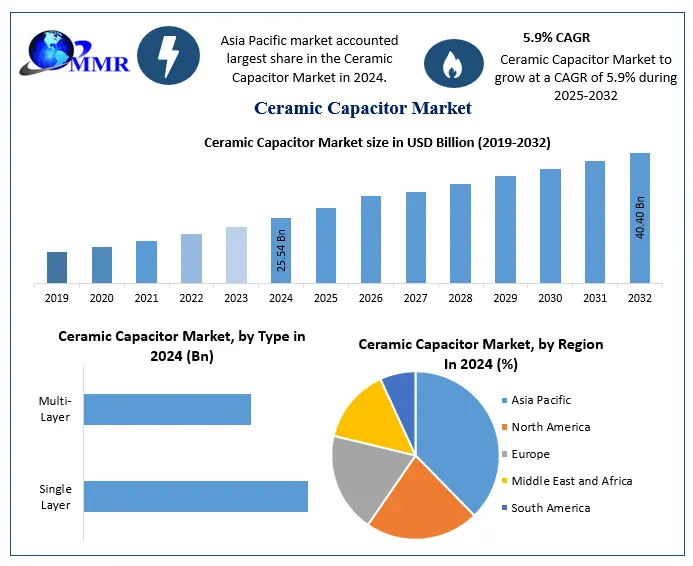
  • Ceramic Capacitor Market Size To Grow At A CAGR Of 5.9% In The Forecast Period Of 2025-2032

    Ceramic capacitor market, valued at USD 25.54 billion in 2024, is projected to grow at a compound annual growth rate (CAGR) of 5.9%, reaching approximately USD 40.40 billion by 2032. This growth is attributed to the increasing demand for compact, reliable, and high-performance components in various electronic applications.

    Request free sample report:https://www.maximizemarketresearch.com/request-sample/250615/

    Market Overview

    Ceramic capacitors are electronic components that use ceramic materials as their dielectric. They are widely utilized due to their small size, reliability, and stability over time. These capacitors are integral in numerous electronic devices and systems, including smartphones, tablets, laptops, wearables, and automotive electronics.

    Market Dynamics

    Drivers:

    Consumer Electronics: The proliferation of smartphones, tablets, and other portable devices has significantly increased the demand for compact and efficient capacitors.

    Automotive Industry: The rise of electric vehicles (EVs) and advanced driver-assistance systems (ADAS) necessitates the use of high-performance capacitors capable of withstanding harsh conditions.

    Telecommunication: The expansion of 5G networks requires capacitors that can operate at higher frequencies and provide stable performance.

    Industrial Applications: The growing automation and industrial equipment sectors demand capacitors that offer reliability and efficiency in various applications.

    Restraints:

    Manufacturing Challenges: The production of high-capacitance ceramic capacitors involves complex processes, including high-temperature sintering and precise layering techniques, which can increase manufacturing costs.

    Market Competition: Intense competition among key players may lead to pricing pressures, affecting profitability.

    Segmentation Analysis

    By Type:

    Multi-Layer Ceramic Capacitors (MLCCs): In 2024, MLCCs held the largest share of the ceramic capacitor market. Their high capacitance per unit volume, reliability, and efficiency make them suitable for various applications, including consumer electronics, automotive, telecommunications, and industrial equipment.

    Single-Layer Ceramic Capacitors (SLCCs): SLCCs are typically used in less demanding applications where lower capacitance and voltage are sufficient.

    By Application:

    Consumer Electronics: The consumer electronics sector is the leading application area for ceramic capacitors, driven by the widespread use of smartphones, tablets, and other portable devices.

    Automotive: The automotive industry, particularly the electric vehicle segment, requires capacitors that can withstand high temperatures and provide stable performance.

    Telecommunication: The expansion of 5G networks necessitates capacitors capable of operating at higher frequencies and ensuring signal integrity.

    Industrial Equipment: Industrial automation and equipment sectors demand capacitors that offer reliability and efficiency in various applications.

    Regional Insights

    Asia-Pacific: In 2024, the Asia-Pacific region led the ceramic capacitor manufacturing market, with countries such as China, Japan, and South Korea contributing significantly. The region's robust infrastructure, skilled workforce, and technological advancements in production methods have bolstered its dominance. Major manufacturers like Murata Manufacturing, Samsung Electro-Mechanics, Taiyo Yuden, and TDK Corporation are headquartered in this region, driving innovation and maintaining high-quality production standards.

    North America and Europe: These regions are expected to witness steady growth in the ceramic capacitor market, driven by advancements in consumer electronics, automotive applications, and telecommunication infrastructure.

    Competitive Landscape

    The ceramic capacitor market is characterized by the presence of several key players, including:

    Murata Manufacturing Co., Ltd.

    TDK Corporation

    Samsung Electro-Mechanics Co., Ltd.

    Taiyo Yuden Co., Ltd.

    Kyocera Corporation

    Yageo Corporation

    Walsin Technology Corporation

    Rohm Co., Ltd.

    Holy Stone Holdings Co., Ltd.

    Nippon Chemi-Con Corporation

    Viiyong

    Dalicap Technology

    Viking Tech

    Fujian Torch Electron Technology Company

    These companies are focusing on research and development to innovate and enhance the performance of ceramic capacitors, catering to the evolving demands of various industries.

    Conclusion

    The global ceramic capacitor market is poised for significant growth, driven by advancements in consumer electronics, automotive applications, and telecommunication infrastructure. As industries continue to demand compact, reliable, and high-performance components, the ceramic capacitor market is expected to expand, offering opportunities for manufacturers and stakeholders across the value chain.

    Related report:

    Cybersecurity mesh market:
    https://www.maximizemarketresearch.com/market-report/cybersecurity-mesh-market/200224/

    Application performance monitoring market:
    https://www.maximizemarketresearch.com/market-report/application-performance-monitoring-market/200134/

    About Us

    Maximize Market Research is one of the fastest-growing market research and business consulting firms serving clients globally. Our revenue impact and focused growth-driven research initiatives make us a proud partner of majority of the Fortune 500 companies. We have a diversified portfolio and serve a variety of industries such as IT & telecom, chemical, food & beverage, aerospace & defense, healthcare and others.

    MAXIMIZE MARKET RESEARCH PVT. LTD.

    2nd Floor, Navale IT park Phase 3,

    Pune Banglore Highway, Narhe

    Pune, Maharashtra 411041, India.

    +91 9607365656

    [email protected]
    Ceramic Capacitor Market Size To Grow At A CAGR Of 5.9% In The Forecast Period Of 2025-2032 Ceramic capacitor market, valued at USD 25.54 billion in 2024, is projected to grow at a compound annual growth rate (CAGR) of 5.9%, reaching approximately USD 40.40 billion by 2032. This growth is attributed to the increasing demand for compact, reliable, and high-performance components in various electronic applications. Request free sample report:https://www.maximizemarketresearch.com/request-sample/250615/ Market Overview Ceramic capacitors are electronic components that use ceramic materials as their dielectric. They are widely utilized due to their small size, reliability, and stability over time. These capacitors are integral in numerous electronic devices and systems, including smartphones, tablets, laptops, wearables, and automotive electronics. Market Dynamics Drivers: Consumer Electronics: The proliferation of smartphones, tablets, and other portable devices has significantly increased the demand for compact and efficient capacitors. Automotive Industry: The rise of electric vehicles (EVs) and advanced driver-assistance systems (ADAS) necessitates the use of high-performance capacitors capable of withstanding harsh conditions. Telecommunication: The expansion of 5G networks requires capacitors that can operate at higher frequencies and provide stable performance. Industrial Applications: The growing automation and industrial equipment sectors demand capacitors that offer reliability and efficiency in various applications. Restraints: Manufacturing Challenges: The production of high-capacitance ceramic capacitors involves complex processes, including high-temperature sintering and precise layering techniques, which can increase manufacturing costs. Market Competition: Intense competition among key players may lead to pricing pressures, affecting profitability. Segmentation Analysis By Type: Multi-Layer Ceramic Capacitors (MLCCs): In 2024, MLCCs held the largest share of the ceramic capacitor market. Their high capacitance per unit volume, reliability, and efficiency make them suitable for various applications, including consumer electronics, automotive, telecommunications, and industrial equipment. Single-Layer Ceramic Capacitors (SLCCs): SLCCs are typically used in less demanding applications where lower capacitance and voltage are sufficient. By Application: Consumer Electronics: The consumer electronics sector is the leading application area for ceramic capacitors, driven by the widespread use of smartphones, tablets, and other portable devices. Automotive: The automotive industry, particularly the electric vehicle segment, requires capacitors that can withstand high temperatures and provide stable performance. Telecommunication: The expansion of 5G networks necessitates capacitors capable of operating at higher frequencies and ensuring signal integrity. Industrial Equipment: Industrial automation and equipment sectors demand capacitors that offer reliability and efficiency in various applications. Regional Insights Asia-Pacific: In 2024, the Asia-Pacific region led the ceramic capacitor manufacturing market, with countries such as China, Japan, and South Korea contributing significantly. The region's robust infrastructure, skilled workforce, and technological advancements in production methods have bolstered its dominance. Major manufacturers like Murata Manufacturing, Samsung Electro-Mechanics, Taiyo Yuden, and TDK Corporation are headquartered in this region, driving innovation and maintaining high-quality production standards. North America and Europe: These regions are expected to witness steady growth in the ceramic capacitor market, driven by advancements in consumer electronics, automotive applications, and telecommunication infrastructure. Competitive Landscape The ceramic capacitor market is characterized by the presence of several key players, including: Murata Manufacturing Co., Ltd. TDK Corporation Samsung Electro-Mechanics Co., Ltd. Taiyo Yuden Co., Ltd. Kyocera Corporation Yageo Corporation Walsin Technology Corporation Rohm Co., Ltd. Holy Stone Holdings Co., Ltd. Nippon Chemi-Con Corporation Viiyong Dalicap Technology Viking Tech Fujian Torch Electron Technology Company These companies are focusing on research and development to innovate and enhance the performance of ceramic capacitors, catering to the evolving demands of various industries. Conclusion The global ceramic capacitor market is poised for significant growth, driven by advancements in consumer electronics, automotive applications, and telecommunication infrastructure. As industries continue to demand compact, reliable, and high-performance components, the ceramic capacitor market is expected to expand, offering opportunities for manufacturers and stakeholders across the value chain. Related report: Cybersecurity mesh market: https://www.maximizemarketresearch.com/market-report/cybersecurity-mesh-market/200224/ Application performance monitoring market: https://www.maximizemarketresearch.com/market-report/application-performance-monitoring-market/200134/ About Us Maximize Market Research is one of the fastest-growing market research and business consulting firms serving clients globally. Our revenue impact and focused growth-driven research initiatives make us a proud partner of majority of the Fortune 500 companies. We have a diversified portfolio and serve a variety of industries such as IT & telecom, chemical, food & beverage, aerospace & defense, healthcare and others. MAXIMIZE MARKET RESEARCH PVT. LTD. 2nd Floor, Navale IT park Phase 3, Pune Banglore Highway, Narhe Pune, Maharashtra 411041, India. +91 9607365656 [email protected]
    0 Commentaires 0 Parts 11607 Vue
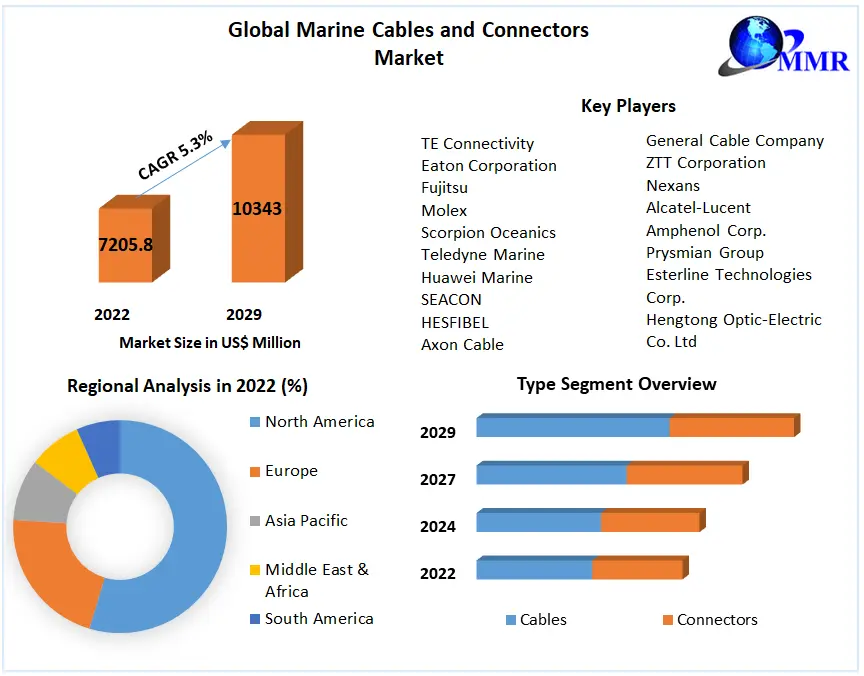
  • Marine Cables and Connectors Market Size To Grow At A CAGR Of 5.3% In The Forecast Period Of 2023-2029

    Marine cables and connectors market is projected to grow from USD 7,205.8 million in 2022 to approximately USD 10,343.9 million by 2029, registering a compound annual growth rate (CAGR) of 5.3% during the forecast period.

    Request Free Sample Report:https://www.maximizemarketresearch.com/request-sample/34068/

    Key Growth Drivers
    Expansion of Subsea Infrastructure: The increasing demand for high-performance and reliable connectivity in offshore oil & gas, renewable energy, and telecommunications sectors is driving the installation of underwater power and communication lines.

    Adoption of Fiber-Optic Technology: The shift towards fiber-optic cables, known for their efficient and high-speed data transfer capabilities, is enhancing the performance of marine communication systems.

    Defense and Military Applications: Growing investments in defense and military sectors are contributing to the demand for robust marine cables and connectors to support secure and efficient communication systems.

    Market Segmentation
    By Type:

    Cables: This segment holds a dominant market share, with fiber-optic cables being widely adopted due to their superior data transmission capabilities.

    Connectors: Essential for ensuring secure and reliable connections in underwater environments.

    By Underwater Depth:

    Beach Joint 2: This segment leads the market, attributed to the significant increase in the installation of underwater power and cable network lines.

    By End-Use Industry:

    Oil & Gas: The need for reliable communication and power transmission in offshore drilling operations is driving demand.

    Power Transmission: The integration of renewable energy sources necessitates efficient underwater power transmission solutions.

    Regional Insights
    North America: This region held the largest market share in 2022, driven by substantial investments in research and development, particularly in the U.S. and Canada. The presence of key market players and advanced infrastructure supports market growth.

    Asia-Pacific: Rapid industrialization and urbanization in countries like China, Japan, and India are leading to increased adoption of marine cables and connectors, especially in the telecommunications and energy sectors

    Competitive Landscape
    The marine cables and connectors market is characterized by the presence of several key players focusing on technological advancements and strategic partnerships to strengthen their market position.

    Future Outlook
    The marine cables and connectors market is poised for steady growth, fueled by technological advancements, increasing demand for high-speed data transmission, and the expansion of offshore activities. The integration of renewable energy sources and the emphasis on sustainable infrastructure development are expected to further propel market growth.

    Related report:

    Industrial artificial intelligance market:https://www.maximizemarketresearch.com/market-report/industrial-artificial-intelligence-market/190965/

    South america life reinsurance market:https://www.maximizemarketresearch.com/market-report/south-america-life-reinsurance-market/190980/

    About Us

    Maximize Market Research is one of the fastest-growing market research and business consulting firms serving clients globally. Our revenue impact and focused growth-driven research initiatives make us a proud partner of majority of the Fortune 500 companies. We have a diversified portfolio and serve a variety of industries such as IT & telecom, chemical, food & beverage, aerospace & defense, healthcare and others.

    MAXIMIZE MARKET RESEARCH PVT. LTD.

    2nd Floor, Navale IT park Phase 3,

    Pune Banglore Highway, Narhe

    Pune, Maharashtra 411041, India.

    +91 9607365656

    [email protected]
    Marine Cables and Connectors Market Size To Grow At A CAGR Of 5.3% In The Forecast Period Of 2023-2029 Marine cables and connectors market is projected to grow from USD 7,205.8 million in 2022 to approximately USD 10,343.9 million by 2029, registering a compound annual growth rate (CAGR) of 5.3% during the forecast period. Request Free Sample Report:https://www.maximizemarketresearch.com/request-sample/34068/ Key Growth Drivers Expansion of Subsea Infrastructure: The increasing demand for high-performance and reliable connectivity in offshore oil & gas, renewable energy, and telecommunications sectors is driving the installation of underwater power and communication lines. Adoption of Fiber-Optic Technology: The shift towards fiber-optic cables, known for their efficient and high-speed data transfer capabilities, is enhancing the performance of marine communication systems. Defense and Military Applications: Growing investments in defense and military sectors are contributing to the demand for robust marine cables and connectors to support secure and efficient communication systems. Market Segmentation By Type: Cables: This segment holds a dominant market share, with fiber-optic cables being widely adopted due to their superior data transmission capabilities. Connectors: Essential for ensuring secure and reliable connections in underwater environments. By Underwater Depth: Beach Joint 2: This segment leads the market, attributed to the significant increase in the installation of underwater power and cable network lines. By End-Use Industry: Oil & Gas: The need for reliable communication and power transmission in offshore drilling operations is driving demand. Power Transmission: The integration of renewable energy sources necessitates efficient underwater power transmission solutions. Regional Insights North America: This region held the largest market share in 2022, driven by substantial investments in research and development, particularly in the U.S. and Canada. The presence of key market players and advanced infrastructure supports market growth. Asia-Pacific: Rapid industrialization and urbanization in countries like China, Japan, and India are leading to increased adoption of marine cables and connectors, especially in the telecommunications and energy sectors Competitive Landscape The marine cables and connectors market is characterized by the presence of several key players focusing on technological advancements and strategic partnerships to strengthen their market position. Future Outlook The marine cables and connectors market is poised for steady growth, fueled by technological advancements, increasing demand for high-speed data transmission, and the expansion of offshore activities. The integration of renewable energy sources and the emphasis on sustainable infrastructure development are expected to further propel market growth. Related report: Industrial artificial intelligance market:https://www.maximizemarketresearch.com/market-report/industrial-artificial-intelligence-market/190965/ South america life reinsurance market:https://www.maximizemarketresearch.com/market-report/south-america-life-reinsurance-market/190980/ About Us Maximize Market Research is one of the fastest-growing market research and business consulting firms serving clients globally. Our revenue impact and focused growth-driven research initiatives make us a proud partner of majority of the Fortune 500 companies. We have a diversified portfolio and serve a variety of industries such as IT & telecom, chemical, food & beverage, aerospace & defense, healthcare and others. MAXIMIZE MARKET RESEARCH PVT. LTD. 2nd Floor, Navale IT park Phase 3, Pune Banglore Highway, Narhe Pune, Maharashtra 411041, India. +91 9607365656 [email protected]
    0 Commentaires 0 Parts 9757 Vue
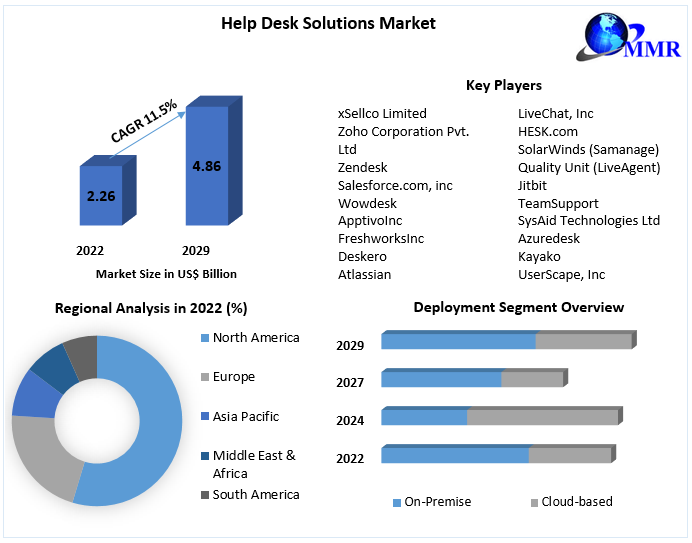
  • Help Desk Solutions market Size To Grow At A CAGR Of 11.5% In The Forecast Period Of 2023-2029

    Help desk solutions market is projected to grow from $2.5 billion in 2024 to approximately $4.86 billion by 2029, reflecting a compound annual growth rate (CAGR) of 11.5% . This growth is primarily driven by the increasing integration of artificial intelligence (AI) and machine learning (ML) technologies, which enhance automation and efficiency in customer support operations. Additionally, the demand for omnichannel support solutions is rising, as businesses seek to provide seamless customer experiences across various communication platforms.

    Request Free Sample Report:https://www.maximizemarketresearch.com/request-sample/80519/

    Latest Trends and Investments in 2024

    In 2024, the help desk solutions market witnessed significant advancements, particularly in AI-driven automation. Companies like Zendesk and Freshworks expanded their AI capabilities, integrating chatbots and virtual assistants to handle routine inquiries, thereby improving response times and customer satisfaction

    Furthermore, the adoption of omnichannel support platforms gained momentum, with businesses seeking to engage customers across multiple touchpoints, including email, chat, social media, and voice. This shift towards integrated communication channels is reshaping the landscape of customer support services.

    Market Segmentation: Dominant Segments

    By Platform: The web-based segment is anticipated to account for a significant market share during the forecast period, owing to its user-friendly interface and accessibility .

    By Deployment: Cloud-based solutions are gaining traction due to their scalability, cost-effectiveness, and ease of implementation, making them particularly appealing to SMEs.

    By Industry Vertical: The IT and telecommunications sector held the highest market share in 2022 and is expected to maintain its dominance, driven by the increasing demand for efficient IT support services .

    By Organization Size: SMEs are projected to experience significant growth in adopting help desk solutions, attributed to the need for streamlined customer support processes and resource optimization .

    Competitive Analysis: Top 5 Global Players

    Zendesk: A leader in the help desk solutions market, Zendesk offers a comprehensive suite of customer service tools, including AI-powered chatbots and omnichannel support capabilities.

    Freshworks: Known for its user-friendly interface and scalability, Freshworks provides cloud-based help desk solutions with integrated AI features to enhance customer support operations.

    Zoho Corporation: Zoho offers a range of help desk solutions tailored for SMEs, focusing on automation and multichannel support to improve customer engagement.

    Microsoft: Through its Dynamics 365 suite, Microsoft provides integrated help desk solutions with advanced analytics and AI capabilities to support enterprise-level customer service needs.

    BMC Software: BMC offers IT service management solutions with robust help desk functionalities, catering to large enterprises seeking comprehensive support systems.

    Regional Analysis

    North America: Dominates the global help desk solutions market, accounting for a significant share in 2022. The region's leadership is attributed to its advanced technological infrastructure and the presence of key market players .

    Asia-Pacific: Expected to record the highest growth rate during the forecast period, driven by rapid digital transformation and increasing adoption of cloud-based solutions in countries like India, China, and Japan .

    Europe: Experiences steady growth, with businesses focusing on enhancing customer service capabilities through the adoption of integrated help desk solutions.

    Latin America and Middle East & Africa: These regions are witnessing gradual adoption of help desk solutions, with potential for growth as digitalization efforts intensify.

    Conclusion

    The global help desk solutions market is on a robust growth trajectory, driven by technological advancements in AI and the increasing demand for omnichannel support. As businesses across various sectors recognize the importance of efficient customer service operations, the adoption of integrated help desk solutions is expected to rise. For companies aiming to enhance customer satisfaction and streamline support processes, investing in modern help desk solutions presents a significant opportunity.


    Related Report:

    industrial artificial intelligence market:https://www.maximizemarketresearch.com/market-report/industrial-artificial-intelligence-market/190965/

    south america life reinsurance market:https://www.maximizemarketresearch.com/market-report/south-america-life-reinsurance-market/190980/


    About Us

    Maximize Market Research is one of the fastest-growing market research and business consulting firms serving clients globally. Our revenue impact and focused growth-driven research initiatives make us a proud partner of majority of the Fortune 500 companies. We have a diversified portfolio and serve a variety of industries such as IT & telecom, chemical, food & beverage, aerospace & defense, healthcare and others.

    MAXIMIZE MARKET RESEARCH PVT. LTD.

    2nd Floor, Navale IT park Phase 3,

    Pune Banglore Highway, Narhe

    Pune, Maharashtra 411041, India.

    +91 9607365656

    [email protected]
    Help Desk Solutions market Size To Grow At A CAGR Of 11.5% In The Forecast Period Of 2023-2029 Help desk solutions market is projected to grow from $2.5 billion in 2024 to approximately $4.86 billion by 2029, reflecting a compound annual growth rate (CAGR) of 11.5% . This growth is primarily driven by the increasing integration of artificial intelligence (AI) and machine learning (ML) technologies, which enhance automation and efficiency in customer support operations. Additionally, the demand for omnichannel support solutions is rising, as businesses seek to provide seamless customer experiences across various communication platforms. Request Free Sample Report:https://www.maximizemarketresearch.com/request-sample/80519/ Latest Trends and Investments in 2024 In 2024, the help desk solutions market witnessed significant advancements, particularly in AI-driven automation. Companies like Zendesk and Freshworks expanded their AI capabilities, integrating chatbots and virtual assistants to handle routine inquiries, thereby improving response times and customer satisfaction Furthermore, the adoption of omnichannel support platforms gained momentum, with businesses seeking to engage customers across multiple touchpoints, including email, chat, social media, and voice. This shift towards integrated communication channels is reshaping the landscape of customer support services. Market Segmentation: Dominant Segments By Platform: The web-based segment is anticipated to account for a significant market share during the forecast period, owing to its user-friendly interface and accessibility . By Deployment: Cloud-based solutions are gaining traction due to their scalability, cost-effectiveness, and ease of implementation, making them particularly appealing to SMEs. By Industry Vertical: The IT and telecommunications sector held the highest market share in 2022 and is expected to maintain its dominance, driven by the increasing demand for efficient IT support services . By Organization Size: SMEs are projected to experience significant growth in adopting help desk solutions, attributed to the need for streamlined customer support processes and resource optimization . Competitive Analysis: Top 5 Global Players Zendesk: A leader in the help desk solutions market, Zendesk offers a comprehensive suite of customer service tools, including AI-powered chatbots and omnichannel support capabilities. Freshworks: Known for its user-friendly interface and scalability, Freshworks provides cloud-based help desk solutions with integrated AI features to enhance customer support operations. Zoho Corporation: Zoho offers a range of help desk solutions tailored for SMEs, focusing on automation and multichannel support to improve customer engagement. Microsoft: Through its Dynamics 365 suite, Microsoft provides integrated help desk solutions with advanced analytics and AI capabilities to support enterprise-level customer service needs. BMC Software: BMC offers IT service management solutions with robust help desk functionalities, catering to large enterprises seeking comprehensive support systems. Regional Analysis North America: Dominates the global help desk solutions market, accounting for a significant share in 2022. The region's leadership is attributed to its advanced technological infrastructure and the presence of key market players . Asia-Pacific: Expected to record the highest growth rate during the forecast period, driven by rapid digital transformation and increasing adoption of cloud-based solutions in countries like India, China, and Japan . Europe: Experiences steady growth, with businesses focusing on enhancing customer service capabilities through the adoption of integrated help desk solutions. Latin America and Middle East & Africa: These regions are witnessing gradual adoption of help desk solutions, with potential for growth as digitalization efforts intensify. Conclusion The global help desk solutions market is on a robust growth trajectory, driven by technological advancements in AI and the increasing demand for omnichannel support. As businesses across various sectors recognize the importance of efficient customer service operations, the adoption of integrated help desk solutions is expected to rise. For companies aiming to enhance customer satisfaction and streamline support processes, investing in modern help desk solutions presents a significant opportunity. Related Report: industrial artificial intelligence market:https://www.maximizemarketresearch.com/market-report/industrial-artificial-intelligence-market/190965/ south america life reinsurance market:https://www.maximizemarketresearch.com/market-report/south-america-life-reinsurance-market/190980/ About Us Maximize Market Research is one of the fastest-growing market research and business consulting firms serving clients globally. Our revenue impact and focused growth-driven research initiatives make us a proud partner of majority of the Fortune 500 companies. We have a diversified portfolio and serve a variety of industries such as IT & telecom, chemical, food & beverage, aerospace & defense, healthcare and others. MAXIMIZE MARKET RESEARCH PVT. LTD. 2nd Floor, Navale IT park Phase 3, Pune Banglore Highway, Narhe Pune, Maharashtra 411041, India. +91 9607365656 [email protected]
    0 Commentaires 0 Parts 13706 Vue
  • A fibre welder precisely fuses optical fibers, ensuring seamless connections for high-speed data transmission in telecommunications, networking, and medical devices, enhancing signal integrity and reducing loss.
    https://www.laserchina.com/fiber-laser-welder/
    #fibrewelder
    A fibre welder precisely fuses optical fibers, ensuring seamless connections for high-speed data transmission in telecommunications, networking, and medical devices, enhancing signal integrity and reducing loss. https://www.laserchina.com/fiber-laser-welder/ #fibrewelder
    0 Commentaires 0 Parts 6808 Vue