
• Consumer Defensive Sector: Stability in an Ever-Changing Market

    In times of economic uncertainty, investors, analysts, and businesses often turn their attention to one dependable corner of the market—the Consumer Defensive sector. Also known as consumer staples, this category includes companies that produce essential goods people buy regardless of economic conditions. From food and beverages to household and personal care products, the consumer defensive industry forms the backbone of everyday life.

    This blog explores the Consumer Defensive category through industry overview, recent developments, strategic SWOT analysis, financial performance, and competitive landscape.

    Read More: https://www.swotreports.com/market-analysis/consumer-defensive

    Understanding the Consumer Defensive Category

    The Consumer Defensive sector consists of companies that provide essential, non-discretionary products and services. Demand for these products remains relatively stable even during recessions, inflationary cycles, or geopolitical disruptions.

    Typical sub-segments include:

    Packaged food and beverages
    Household and personal care products
    Grocery stores and discount retailers
    Tobacco and farm products
    Education and basic consumer services
    Because of their resilience, consumer defensive companies are often viewed as low-volatility and long-term value plays within the broader market.

    Company Introduction – Sector Perspective

    Companies in the Consumer Defensive category range from global FMCG giants to large-scale retailers and regional staples producers. These organizations typically operate with:

    Strong brand portfolios
    Wide distribution networks
    High volumes and recurring customer demand
    Global leaders such as Walmart, Procter & Gamble, Coca-Cola, PepsiCo, Costco, and Colgate-Palmolive dominate the sector through scale, brand loyalty, and supply-chain efficiency.

    Recent Company Developments and Industry Updates

    Over the last few years, the Consumer Defensive sector has shown remarkable resilience, even as other sectors faced sharp volatility.

    Key Developments:

    Digital and Omnichannel Expansion: Retailers such as Walmart and Costco continue investing in e-commerce, supply chain automation, and last-mile delivery.
    Pricing and Margin Management: FMCG companies have used selective price increases to offset inflation in raw materials.
    Product Innovation: There is growing emphasis on health-focused, organic, sustainable, and premium consumer products.
    Cost Optimization: Companies are investing in AI, automation, and data analytics to improve operational efficiency.
    These strategies have allowed consumer defensive firms to protect margins while maintaining consistent demand.

    Strategic Analysis Review – SWOT Analysis

    Strengths

    Stable and predictable demand across economic cycles
    Strong brand equity and customer loyalty
    Reliable cash flows and dividend-paying capacity
    Weaknesses

    Slower growth compared to cyclical or technology sectors
    Sensitivity to raw material and logistics costs
    Limited pricing flexibility in highly competitive markets
    Opportunities

    Growth in health, wellness, and sustainable product categories
    Expansion in emerging markets
    Digital retail and direct-to-consumer (DTC) channels
    Threats

    Inflation impacting consumer purchasing power
    Supply-chain disruptions
    Intense price competition and private-label products
    Business Description and Key Products & Services

    The Consumer Defensive sector serves daily consumer needs through a wide product mix.

    Key Products and Services

    Sub-Sector

    Core Products & Services

    Packaged Foods

    Snacks, dairy, cereals, frozen foods

    Beverages

    Soft drinks, bottled water, juices

    Household Products

    Detergents, cleaners, paper goods

    Personal Care

    Toothpaste, soaps, hygiene products

    Grocery & Discount Retail

    Supermarkets, essential retail

    Tobacco

    Cigarettes, smokeless products

    Farm & Food Distribution

    Agricultural goods and logistics

    This diversity helps companies spread risk and maintain revenue stability.

    Financial Analysis – Ten-Year Historical Performance

    Historically, the Consumer Defensive sector has delivered steady growth with lower volatility than most other industries.

    Estimated Sector Revenue Growth (10-Year Trend)

    Year

    Growth Trend

    2016–2018

    3–4% annually

    2019

    ~4%

    2020

    ~5.5% (pandemic-driven demand)

    2021

    ~3.7%

    2022

    ~2.9%

    2023

    ~3.3%

    2024

    ~3.6%

    2025

    ~3.8% (estimated)

    Financial Characteristics

    Stable revenue streams
    Strong operating cash flows
    Consistent dividend payouts
    Moderate but predictable margins
    Unlike cyclical industries, consumer defensive companies prioritize capital preservation and shareholder returns over aggressive expansion.

    Competitors and Industry Analysis

    Major Global Competitors

    Company

    Core Segment

    Walmart Inc.

    Grocery & discount retail

    Procter & Gamble

    Household & personal care

    Coca-Cola

    Beverages

    PepsiCo

    Beverages & snacks

    Costco Wholesale

    Retail & staples

    Philip Morris

    Tobacco

    Colgate-Palmolive

    Oral & personal care

    These companies benefit from scale, pricing power, and global distribution.

    Industry Characteristics

    High barriers to entry due to scale and brand dominance
    Strong competition from private labels and regional players
    Increasing convergence between physical retail and digital commerce
    Consumer Defensive Sector Composition

    Segment

    Approx. Share

    Grocery & Discount Retail

    ~40%

    Beverages

    ~19%

    Household & Personal Care

    ~15%

    Tobacco

    ~10%

    Packaged Foods

    ~5%

    Others

    ~11%

    This balance ensures sector resilience even when individual sub-segments face pressure.

    About Us:

    SWOT Reports is a leading provider of market research reports in Chemicals, Energy, Oil & Gas, Food & Beverage, Electronics & Semiconductors, Automotive, Telecommunication, Healthcare and Other industries.

    SWOT Reports, established in 2009 has 14+ years of experience and served 1800+ clients from 980+ companies operating in 54+ countries.

    Connect with us

    +91 630 95 25755

    [email protected]

    Read more at: https://www.swotreports.com/

    Consumer Defensive Sector: Stability in an Ever-Changing Market In times of economic uncertainty, investors, analysts, and businesses often turn their attention to one dependable corner of the market—the Consumer Defensive sector. Also known as consumer staples, this category includes companies that produce essential goods people buy regardless of economic conditions. From food and beverages to household and personal care products, the consumer defensive industry forms the backbone of everyday life. This blog explores the Consumer Defensive category through industry overview, recent developments, strategic SWOT analysis, financial performance, and competitive landscape. Read More: https://www.swotreports.com/market-analysis/consumer-defensive Understanding the Consumer Defensive Category The Consumer Defensive sector consists of companies that provide essential, non-discretionary products and services. Demand for these products remains relatively stable even during recessions, inflationary cycles, or geopolitical disruptions. Typical sub-segments include: Packaged food and beverages Household and personal care products Grocery stores and discount retailers Tobacco and farm products Education and basic consumer services Because of their resilience, consumer defensive companies are often viewed as low-volatility and long-term value plays within the broader market. Company Introduction – Sector Perspective Companies in the Consumer Defensive category range from global FMCG giants to large-scale retailers and regional staples producers. These organizations typically operate with: Strong brand portfolios Wide distribution networks High volumes and recurring customer demand Global leaders such as Walmart, Procter & Gamble, Coca-Cola, PepsiCo, Costco, and Colgate-Palmolive dominate the sector through scale, brand loyalty, and supply-chain efficiency. Recent Company Developments and Industry Updates Over the last few years, the Consumer Defensive sector has shown remarkable resilience, even as other sectors faced sharp volatility. Key Developments: Digital and Omnichannel Expansion: Retailers such as Walmart and Costco continue investing in e-commerce, supply chain automation, and last-mile delivery. Pricing and Margin Management: FMCG companies have used selective price increases to offset inflation in raw materials. Product Innovation: There is growing emphasis on health-focused, organic, sustainable, and premium consumer products. Cost Optimization: Companies are investing in AI, automation, and data analytics to improve operational efficiency. These strategies have allowed consumer defensive firms to protect margins while maintaining consistent demand. Strategic Analysis Review – SWOT Analysis Strengths Stable and predictable demand across economic cycles Strong brand equity and customer loyalty Reliable cash flows and dividend-paying capacity Weaknesses Slower growth compared to cyclical or technology sectors Sensitivity to raw material and logistics costs Limited pricing flexibility in highly competitive markets Opportunities Growth in health, wellness, and sustainable product categories Expansion in emerging markets Digital retail and direct-to-consumer (DTC) channels Threats Inflation impacting consumer purchasing power Supply-chain disruptions Intense price competition and private-label products Business Description and Key Products & Services The Consumer Defensive sector serves daily consumer needs through a wide product mix. Key Products and Services Sub-Sector Core Products & Services Packaged Foods Snacks, dairy, cereals, frozen foods Beverages Soft drinks, bottled water, juices Household Products Detergents, cleaners, paper goods Personal Care Toothpaste, soaps, hygiene products Grocery & Discount Retail Supermarkets, essential retail Tobacco Cigarettes, smokeless products Farm & Food Distribution Agricultural goods and logistics This diversity helps companies spread risk and maintain revenue stability. Financial Analysis – Ten-Year Historical Performance Historically, the Consumer Defensive sector has delivered steady growth with lower volatility than most other industries. Estimated Sector Revenue Growth (10-Year Trend) Year Growth Trend 2016–2018 3–4% annually 2019 ~4% 2020 ~5.5% (pandemic-driven demand) 2021 ~3.7% 2022 ~2.9% 2023 ~3.3% 2024 ~3.6% 2025 ~3.8% (estimated) Financial Characteristics Stable revenue streams Strong operating cash flows Consistent dividend payouts Moderate but predictable margins Unlike cyclical industries, consumer defensive companies prioritize capital preservation and shareholder returns over aggressive expansion. Competitors and Industry Analysis Major Global Competitors Company Core Segment Walmart Inc. Grocery & discount retail Procter & Gamble Household & personal care Coca-Cola Beverages PepsiCo Beverages & snacks Costco Wholesale Retail & staples Philip Morris Tobacco Colgate-Palmolive Oral & personal care These companies benefit from scale, pricing power, and global distribution. Industry Characteristics High barriers to entry due to scale and brand dominance Strong competition from private labels and regional players Increasing convergence between physical retail and digital commerce Consumer Defensive Sector Composition Segment Approx. Share Grocery & Discount Retail ~40% Beverages ~19% Household & Personal Care ~15% Tobacco ~10% Packaged Foods ~5% Others ~11% This balance ensures sector resilience even when individual sub-segments face pressure. About Us: SWOT Reports is a leading provider of market research reports in Chemicals, Energy, Oil & Gas, Food & Beverage, Electronics & Semiconductors, Automotive, Telecommunication, Healthcare and Other industries. SWOT Reports, established in 2009 has 14+ years of experience and served 1800+ clients from 980+ companies operating in 54+ countries. Connect with us +91 630 95 25755 [email protected] Read more at: https://www.swotreports.com/
    WWW.SWOTREPORTS.COM
    Market Research reports, Advisory Company and Revenue Impact,Industry Reports
    Access our comprehensive industry reports for deep insights, market trends, and strategic analysis. Empower your business with our expert research and data
    0 Σχόλια 0 Μοιράστηκε 266 Views
  • Communication Services: Powering Global Digital Connectivity
    Introduction – Communication Services Overview

    The Communication Services sector plays a pivotal role in enabling global connectivity by facilitating voice, data, video, and digital communication across individuals, enterprises, and governments. This category encompasses telecommunications operators, internet service providers, cloud communication platforms, digital messaging services, media distribution networks, and over-the-top (OTT) service providers. With rapid digitalization, the sector has evolved beyond traditional voice services to include broadband connectivity, 5G networks, cloud-based communication platforms, and integrated enterprise solutions.

    The growing reliance on mobile internet, video streaming, digital payments, remote working, and IoT applications has significantly increased the demand for robust and scalable communication infrastructure. As a result, communication services have become a core component of economic development, technological advancement, and digital inclusion worldwide.

    Read More: https://www.swotreports.com/market-analysis/communication-services

    Company Introduction (Category Perspective)

    Companies operating within the Communication Services category range from large multinational telecom operators to specialized cloud communication and digital media service providers. These companies focus on building and managing communication infrastructure, delivering connectivity services, and offering digital platforms that enable seamless interaction across devices and geographies.

    Leading players typically operate extensive network infrastructures, including mobile networks (4G/5G), fiber-optic broadband, satellite communication systems, and cloud-based platforms. Their business models often combine consumer services, enterprise solutions, and wholesale connectivity, allowing them to serve diverse customer segments while maintaining recurring revenue streams.

    Recent Company Developments and Industry Updates

    In recent years, the Communication Services sector has witnessed significant strategic developments:

    Network Expansion and Modernization: Telecom operators continue to invest heavily in 5G deployment, fiber broadband expansion, and network virtualization to enhance speed, capacity, and reliability.
    Shift Toward Digital and Cloud Services: Companies are increasingly expanding their portfolios to include cloud communication platforms (CPaaS), unified communications, and enterprise messaging solutions.
    Strategic Partnerships and Acquisitions: Collaborations with cloud providers, technology firms, and content platforms are being pursued to strengthen service offerings and accelerate innovation.
    Focus on Customer Experience: Service providers are adopting AI-driven analytics, automation, and digital self-service platforms to improve customer engagement and reduce churn.
    These developments reflect the industry’s transition from traditional telecom models toward digitally integrated communication ecosystems.

    Strategic Analysis Review – SWOT Analysis

    Strengths

    Essential infrastructure supporting economic and digital activities.
    Strong and recurring demand driven by data consumption and connectivity needs.
    Technological advancements such as 5G, fiber networks, and cloud platforms.
    Weaknesses

    High capital expenditure requirements for network deployment and maintenance.
    Dependence on regulatory frameworks and spectrum availability.
    Legacy systems in some markets limiting operational agility.
    Opportunities

    Rapid growth in mobile data usage, IoT, and enterprise cloud communications.
    Expansion of digital services such as video streaming, unified communications, and CPaaS.
    Increasing demand for high-speed connectivity in emerging and underserved markets.
    Threats

    Intense competition leading to pricing pressure and margin compression.
    Disruption from OTT players offering alternative communication services.
    Cybersecurity risks and data privacy concerns.
    Business Description and Key Products & Services

    Business Description

    Communication Services companies operate across multiple layers of the value chain, including infrastructure ownership, service delivery, and platform development. Their core objective is to enable reliable, secure, and scalable communication solutions for consumers and enterprises.

    Key Products and Services

    Mobile Communication Services: Voice, SMS, and mobile data services using 4G and 5G networks.
    Fixed Broadband Services: Fiber and DSL-based internet connectivity for homes and businesses.
    Cloud Communication Platforms (CPaaS): APIs for messaging, voice, video, and authentication services.
    Enterprise Solutions: Unified communications, managed connectivity, and collaboration tools.
    Digital and Media Services: OTT content, streaming platforms, and value-added digital services.
    Financial Analysis – Ten-Year Historical Overview

    Over the past decade, the Communication Services sector has demonstrated stable long-term growth, supported by rising data consumption and technological advancements. Key financial trends include:

    Revenue Stability with Digital Growth: While traditional voice revenues have declined, data services and digital platforms have driven overall revenue growth.
    Increasing Capital Expenditure: Significant investments in 4G/5G, fiber networks, and cloud infrastructure have characterized the sector’s financial structure.
    Margin Evolution: Operating margins have faced pressure due to competition and pricing challenges, partially offset by higher-margin digital and enterprise services.
    Shift in Revenue Mix: A growing share of revenues now comes from data, broadband, and enterprise solutions rather than legacy services.
    Overall, the sector’s financial performance reflects a transition toward more technology-driven, service-oriented business models.

    Competitors and Industry Analysis

    Competitive Landscape

    The Communication Services industry is highly competitive and fragmented, with players operating at global, regional, and local levels. Major multinational telecom operators compete on network quality, coverage, pricing, and service innovation, while smaller players and digital platforms focus on niche services and enterprise solutions.

    Industry Dynamics

    High Entry Barriers: Infrastructure costs and regulatory requirements limit new entrants in traditional telecom services.
    Technology-Driven Competition: Differentiation increasingly depends on network performance, digital capabilities, and customer experience.
    Convergence of Services: Telecom, cloud, and media services are converging, intensifying competition across traditional industry boundaries.
    Conclusion

    The Communication Services category continues to evolve as a foundational pillar of the global digital economy. Driven by rising data demand, technological innovation, and expanding digital services, the sector presents significant growth opportunities despite challenges such as competition, regulation, and high capital requirements. Companies that successfully adapt to digital transformation, invest in next-generation networks, and diversify into high-value services are expected to maintain long-term competitiveness in this dynamic industry.

    About Us:

    SWOT Reports is a leading provider of market research reports in Chemicals, Energy, Oil & Gas, Food & Beverage, Electronics & Semiconductors, Automotive, Telecommunication, Healthcare and Other industries.

    SWOT Reports, established in 2009 has 14+ years of experience and served 1800+ clients from 980+ companies operating in 54+ countries.

    Connect with us

    +91 630 95 25755

    [email protected]

    Read more at: https://www.swotreports.com/
    Communication Services: Powering Global Digital Connectivity Introduction – Communication Services Overview The Communication Services sector plays a pivotal role in enabling global connectivity by facilitating voice, data, video, and digital communication across individuals, enterprises, and governments. This category encompasses telecommunications operators, internet service providers, cloud communication platforms, digital messaging services, media distribution networks, and over-the-top (OTT) service providers. With rapid digitalization, the sector has evolved beyond traditional voice services to include broadband connectivity, 5G networks, cloud-based communication platforms, and integrated enterprise solutions. The growing reliance on mobile internet, video streaming, digital payments, remote working, and IoT applications has significantly increased the demand for robust and scalable communication infrastructure. As a result, communication services have become a core component of economic development, technological advancement, and digital inclusion worldwide. Read More: https://www.swotreports.com/market-analysis/communication-services Company Introduction (Category Perspective) Companies operating within the Communication Services category range from large multinational telecom operators to specialized cloud communication and digital media service providers. These companies focus on building and managing communication infrastructure, delivering connectivity services, and offering digital platforms that enable seamless interaction across devices and geographies. Leading players typically operate extensive network infrastructures, including mobile networks (4G/5G), fiber-optic broadband, satellite communication systems, and cloud-based platforms. Their business models often combine consumer services, enterprise solutions, and wholesale connectivity, allowing them to serve diverse customer segments while maintaining recurring revenue streams. Recent Company Developments and Industry Updates In recent years, the Communication Services sector has witnessed significant strategic developments: Network Expansion and Modernization: Telecom operators continue to invest heavily in 5G deployment, fiber broadband expansion, and network virtualization to enhance speed, capacity, and reliability. Shift Toward Digital and Cloud Services: Companies are increasingly expanding their portfolios to include cloud communication platforms (CPaaS), unified communications, and enterprise messaging solutions. Strategic Partnerships and Acquisitions: Collaborations with cloud providers, technology firms, and content platforms are being pursued to strengthen service offerings and accelerate innovation. Focus on Customer Experience: Service providers are adopting AI-driven analytics, automation, and digital self-service platforms to improve customer engagement and reduce churn. These developments reflect the industry’s transition from traditional telecom models toward digitally integrated communication ecosystems. Strategic Analysis Review – SWOT Analysis Strengths Essential infrastructure supporting economic and digital activities. Strong and recurring demand driven by data consumption and connectivity needs. Technological advancements such as 5G, fiber networks, and cloud platforms. Weaknesses High capital expenditure requirements for network deployment and maintenance. Dependence on regulatory frameworks and spectrum availability. Legacy systems in some markets limiting operational agility. Opportunities Rapid growth in mobile data usage, IoT, and enterprise cloud communications. Expansion of digital services such as video streaming, unified communications, and CPaaS. Increasing demand for high-speed connectivity in emerging and underserved markets. Threats Intense competition leading to pricing pressure and margin compression. Disruption from OTT players offering alternative communication services. Cybersecurity risks and data privacy concerns. Business Description and Key Products & Services Business Description Communication Services companies operate across multiple layers of the value chain, including infrastructure ownership, service delivery, and platform development. Their core objective is to enable reliable, secure, and scalable communication solutions for consumers and enterprises. Key Products and Services Mobile Communication Services: Voice, SMS, and mobile data services using 4G and 5G networks. Fixed Broadband Services: Fiber and DSL-based internet connectivity for homes and businesses. Cloud Communication Platforms (CPaaS): APIs for messaging, voice, video, and authentication services. Enterprise Solutions: Unified communications, managed connectivity, and collaboration tools. Digital and Media Services: OTT content, streaming platforms, and value-added digital services. Financial Analysis – Ten-Year Historical Overview Over the past decade, the Communication Services sector has demonstrated stable long-term growth, supported by rising data consumption and technological advancements. Key financial trends include: Revenue Stability with Digital Growth: While traditional voice revenues have declined, data services and digital platforms have driven overall revenue growth. Increasing Capital Expenditure: Significant investments in 4G/5G, fiber networks, and cloud infrastructure have characterized the sector’s financial structure. Margin Evolution: Operating margins have faced pressure due to competition and pricing challenges, partially offset by higher-margin digital and enterprise services. Shift in Revenue Mix: A growing share of revenues now comes from data, broadband, and enterprise solutions rather than legacy services. Overall, the sector’s financial performance reflects a transition toward more technology-driven, service-oriented business models. Competitors and Industry Analysis Competitive Landscape The Communication Services industry is highly competitive and fragmented, with players operating at global, regional, and local levels. Major multinational telecom operators compete on network quality, coverage, pricing, and service innovation, while smaller players and digital platforms focus on niche services and enterprise solutions. Industry Dynamics High Entry Barriers: Infrastructure costs and regulatory requirements limit new entrants in traditional telecom services. Technology-Driven Competition: Differentiation increasingly depends on network performance, digital capabilities, and customer experience. Convergence of Services: Telecom, cloud, and media services are converging, intensifying competition across traditional industry boundaries. Conclusion The Communication Services category continues to evolve as a foundational pillar of the global digital economy. Driven by rising data demand, technological innovation, and expanding digital services, the sector presents significant growth opportunities despite challenges such as competition, regulation, and high capital requirements. Companies that successfully adapt to digital transformation, invest in next-generation networks, and diversify into high-value services are expected to maintain long-term competitiveness in this dynamic industry. About Us: SWOT Reports is a leading provider of market research reports in Chemicals, Energy, Oil & Gas, Food & Beverage, Electronics & Semiconductors, Automotive, Telecommunication, Healthcare and Other industries. SWOT Reports, established in 2009 has 14+ years of experience and served 1800+ clients from 980+ companies operating in 54+ countries. Connect with us +91 630 95 25755 [email protected] Read more at: https://www.swotreports.com/
    WWW.SWOTREPORTS.COM
    Market Research reports, Advisory Company and Revenue Impact,Industry Reports
    Access our comprehensive industry reports for deep insights, market trends, and strategic analysis. Empower your business with our expert research and data
    0 Σχόλια 0 Μοιράστηκε 356 Views
  • Financial Services Industry: An In-Depth Overview

    The Financial Services sector stands at the heart of the global economy — powering lending, investment, insurance, payments, risk management, and capital formation across individuals, corporations, and governments. This vast category includes banks, insurance firms, asset managers, investment banks, wealth managers, fintech companies, credit unions, and non-bank financial institutions such as NBFCs (non-bank financial companies).

    In 2024, the global financial services market was estimated to exceed USD 26 trillion, with projected growth toward USD 42 trillion by 2033 — driven by digital transformation, financial inclusion, and innovation in fintech, AI, and analytics.

    Read More: https://www.swotreports.com/market-analysis/financial-services

    Company Introduction — Sector Perspective

    Companies operating in the financial services space create value by facilitating the flow of money and financial risk. They provide essential economic functions:

    Accepting deposits and extending credit
    Managing assets and investments
    Underwriting insurance risks
    Enabling payments and settlement
    Offering advisory and wealth services
    Digital finance and fintech solutions
    This category is defined by scale, trust, and regulatory oversight, with incumbents ranging from centuries-old universal banks to cutting-edge fintech startups. Their performance influences business cycles, consumer confidence, and capital markets worldwide.

    Company & Sector Developments – Latest News

    The financial services sector is evolving rapidly in response to economic trends, regulatory shifts, and technological disruption:

    Record M&A Activity
    In 2025, U.S. asset managers completed a record 378 mergers and acquisitions totaling USD 38 billion, more than double the previous year. This reflects consolidation as firms seek scale, efficiency, and diversified services amid margin pressures.

    Strong M&A Pipeline in India
    India’s financial services M&A landscape also saw significant momentum in 2025, with USD 104 billion in domestic consolidation deals and growing inbound investment from East Asia and the Middle East, signaling confidence in the region’s financial infrastructure.

    Growing Non-Bank Financial Sector
    “Shadow banking” institutions — including hedge funds, private credit providers, and market funds — now hold more than half of global financial assets, growing roughly twice as fast as traditional lenders. This expansion creates opportunities and systemic risk considerations for regulators.

    Shifting Leadership Priorities
    Financial institutions, particularly in India’s BFSI sector, are prioritizing risk management, governance, and stability, indicating a maturing industry focused on long-term resilience over rapid expansion.

    Digital Disruption
    Reports highlight that traditional banks are losing market share to agile digital competitors — pushing incumbents to accelerate transformation and customer-centric offerings.

    Strategic Analysis Review (SWOT)

    Here’s a strategic snapshot of the Financial Services category:

    Strengths

    Scale and trust: Established institutions command vast customer bases and regulatory credibility.
    Diversified offerings across banking, insurance, asset management, and payments.
    Recurring revenue models from interest, fees, and asset servicing. Weaknesses
    Legacy systems and technical debt slow innovation and elevate costs.
    Regulatory complexity demands ongoing compliance investment.
    Fragmentation between traditional and digital players.
    Opportunities

    Fintech collaboration and digital banking expansion.
    AI and machine learning for fraud detection, personalization, and operational efficiency.
    Open banking and embedded finance expanding product ecosystems. Threats
    Cybersecurity and data privacy risks as digital adoption accelerates.
    Economic volatility affecting loan demand, credit risk, and asset valuations.
    Scalability challenges when integrating emerging technologies.
    Business Description + Key Products & Services

    The financial services industry spans a wide array of core functions, summarized below:

    Segment

    Products & Services

    Banking & Lending

    Retail banking, commercial loans, mortgages, credit cards

    Insurance

    Life, health, property & casualty policies

    Wealth & Asset Management

    Portfolio management, advisory services, mutual funds

    Investment Banking

    M&A advisory, capital markets, underwriting

    Payments & Fintech

    Digital wallets, payment gateways, neobanking

    Risk & Compliance Solutions

    RegTech, fraud detection, governance systems

    Industry evolution reflects a shift from transactional services toward data-driven, personalized, and automated offerings.

    Financial Analysis – Ten Years Historical Overview

    Financial services performance over the last decade demonstrates steady expansion with periodic stress points, such as interest rate cycles and shifting customer behavior toward digital channels.

    Estimated Global Market Size (2016–2025)

    Year

    Estimated Market Size (USD Trillion)

    2016

    ~18.7

    2017

    ~19.9

    2018

    ~21.4

    2019

    ~22.8

    2020

    ~23.5

    2021

    ~24.7

    2022

    ~25.2

    2023

    ~26.0

    2024

    ~26.5

    2025

    ~27.1 (est.)

    Key Financial Trends

    Consistent growth as financial access expands globally.
    Increased fee-based services and digital revenue streams.
    Higher technology investment to support cloud, AI, and mobile platforms.
    Growing non-bank asset share, reflecting diversification of financial intermediation.
    Competitors and Industry Analysis

    Major Global Players

    Top financial institutions remain diversified across banking, insurance, and investment services. Leading names typically include global banks and asset managers such as:

    JPMorgan Chase & Co.
    Bank of America
    HSBC
    BNP Paribas
    Goldman Sachs
    BlackRock
    Allianz
    AXA
    These firms compete on scale, digital capability, product breadth, and global reach.

    Emerging Competitors

    Digital natives and fintech disruptors such as:

    Neobanks and digital lenders
    Payment platform companies
    Blockchain and decentralized finance (DeFi) platforms
    Robo-advisors and wealth tech startups
    These players challenge incumbents through agility, customer experience, and innovative product models.

    About Us:

    SWOT Reports is a leading provider of market research reports in Chemicals, Energy, Oil & Gas, Food & Beverage, Electronics & Semiconductors, Automotive, Telecommunication, Healthcare and Other industries.

    SWOT Reports, established in 2009 has 14+ years of experience and served 1800+ clients from 980+ companies operating in 54+ countries.

    Connect with us

    +91 630 95 25755

    [email protected]

    Read more at: https://www.swotreports.com/
    Financial Services Industry: An In-Depth Overview The Financial Services sector stands at the heart of the global economy — powering lending, investment, insurance, payments, risk management, and capital formation across individuals, corporations, and governments. This vast category includes banks, insurance firms, asset managers, investment banks, wealth managers, fintech companies, credit unions, and non-bank financial institutions such as NBFCs (non-bank financial companies). In 2024, the global financial services market was estimated to exceed USD 26 trillion, with projected growth toward USD 42 trillion by 2033 — driven by digital transformation, financial inclusion, and innovation in fintech, AI, and analytics. Read More: https://www.swotreports.com/market-analysis/financial-services Company Introduction — Sector Perspective Companies operating in the financial services space create value by facilitating the flow of money and financial risk. They provide essential economic functions: Accepting deposits and extending credit Managing assets and investments Underwriting insurance risks Enabling payments and settlement Offering advisory and wealth services Digital finance and fintech solutions This category is defined by scale, trust, and regulatory oversight, with incumbents ranging from centuries-old universal banks to cutting-edge fintech startups. Their performance influences business cycles, consumer confidence, and capital markets worldwide. Company & Sector Developments – Latest News The financial services sector is evolving rapidly in response to economic trends, regulatory shifts, and technological disruption: Record M&A Activity In 2025, U.S. asset managers completed a record 378 mergers and acquisitions totaling USD 38 billion, more than double the previous year. This reflects consolidation as firms seek scale, efficiency, and diversified services amid margin pressures. Strong M&A Pipeline in India India’s financial services M&A landscape also saw significant momentum in 2025, with USD 104 billion in domestic consolidation deals and growing inbound investment from East Asia and the Middle East, signaling confidence in the region’s financial infrastructure. Growing Non-Bank Financial Sector “Shadow banking” institutions — including hedge funds, private credit providers, and market funds — now hold more than half of global financial assets, growing roughly twice as fast as traditional lenders. This expansion creates opportunities and systemic risk considerations for regulators. Shifting Leadership Priorities Financial institutions, particularly in India’s BFSI sector, are prioritizing risk management, governance, and stability, indicating a maturing industry focused on long-term resilience over rapid expansion. Digital Disruption Reports highlight that traditional banks are losing market share to agile digital competitors — pushing incumbents to accelerate transformation and customer-centric offerings. Strategic Analysis Review (SWOT) Here’s a strategic snapshot of the Financial Services category: Strengths Scale and trust: Established institutions command vast customer bases and regulatory credibility. Diversified offerings across banking, insurance, asset management, and payments. Recurring revenue models from interest, fees, and asset servicing. Weaknesses Legacy systems and technical debt slow innovation and elevate costs. Regulatory complexity demands ongoing compliance investment. Fragmentation between traditional and digital players. Opportunities Fintech collaboration and digital banking expansion. AI and machine learning for fraud detection, personalization, and operational efficiency. Open banking and embedded finance expanding product ecosystems. Threats Cybersecurity and data privacy risks as digital adoption accelerates. Economic volatility affecting loan demand, credit risk, and asset valuations. Scalability challenges when integrating emerging technologies. Business Description + Key Products & Services The financial services industry spans a wide array of core functions, summarized below: Segment Products & Services Banking & Lending Retail banking, commercial loans, mortgages, credit cards Insurance Life, health, property & casualty policies Wealth & Asset Management Portfolio management, advisory services, mutual funds Investment Banking M&A advisory, capital markets, underwriting Payments & Fintech Digital wallets, payment gateways, neobanking Risk & Compliance Solutions RegTech, fraud detection, governance systems Industry evolution reflects a shift from transactional services toward data-driven, personalized, and automated offerings. Financial Analysis – Ten Years Historical Overview Financial services performance over the last decade demonstrates steady expansion with periodic stress points, such as interest rate cycles and shifting customer behavior toward digital channels. Estimated Global Market Size (2016–2025) Year Estimated Market Size (USD Trillion) 2016 ~18.7 2017 ~19.9 2018 ~21.4 2019 ~22.8 2020 ~23.5 2021 ~24.7 2022 ~25.2 2023 ~26.0 2024 ~26.5 2025 ~27.1 (est.) Key Financial Trends Consistent growth as financial access expands globally. Increased fee-based services and digital revenue streams. Higher technology investment to support cloud, AI, and mobile platforms. Growing non-bank asset share, reflecting diversification of financial intermediation. Competitors and Industry Analysis Major Global Players Top financial institutions remain diversified across banking, insurance, and investment services. Leading names typically include global banks and asset managers such as: JPMorgan Chase & Co. Bank of America HSBC BNP Paribas Goldman Sachs BlackRock Allianz AXA These firms compete on scale, digital capability, product breadth, and global reach. Emerging Competitors Digital natives and fintech disruptors such as: Neobanks and digital lenders Payment platform companies Blockchain and decentralized finance (DeFi) platforms Robo-advisors and wealth tech startups These players challenge incumbents through agility, customer experience, and innovative product models. About Us: SWOT Reports is a leading provider of market research reports in Chemicals, Energy, Oil & Gas, Food & Beverage, Electronics & Semiconductors, Automotive, Telecommunication, Healthcare and Other industries. SWOT Reports, established in 2009 has 14+ years of experience and served 1800+ clients from 980+ companies operating in 54+ countries. Connect with us +91 630 95 25755 [email protected] Read more at: https://www.swotreports.com/
    WWW.SWOTREPORTS.COM
    Market Research reports, Advisory Company and Revenue Impact,Industry Reports
    Access our comprehensive industry reports for deep insights, market trends, and strategic analysis. Empower your business with our expert research and data
    0 Σχόλια 0 Μοιράστηκε 366 Views
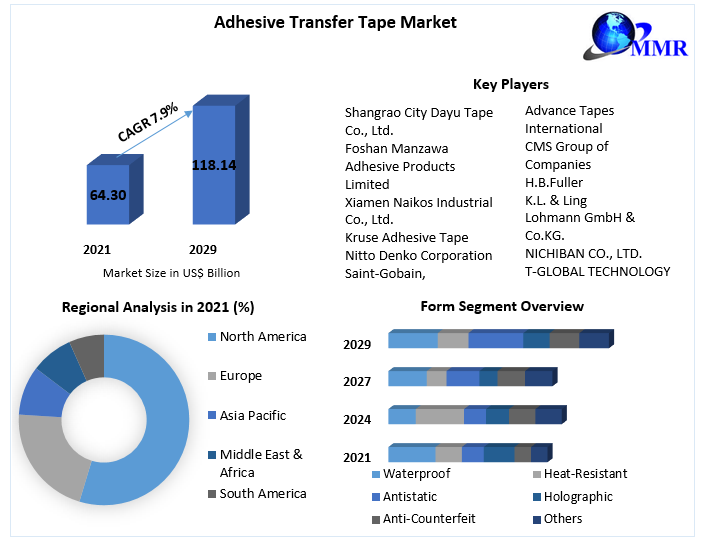
  • Adhesive Transfer Tape Market Growth Forecast, Trends, and Developments (2022-2029)

    Adhesive Transfer Tape Market Overview

    Maximize Market Research is a Business Consultancy Firm that has published a detailed analysis of the “Adhesive Transfer Tape Market”. The report includes key business insights, demand analysis, pricing analysis, and competitive landscape. The analysis in the report provides an in-depth aspect at the current status of the Adhesive Transfer Tape Market, with forecasts outspreading to the year.

    Gain Valuable Insights – Request Your Complimentary Sample Now @ https://www.maximizemarketresearch.com/request-sample/26969/

    Adhesive Transfer Tape Market Scope and Methodology:

    The market research report for Adhesive Transfer Tape provides comprehensive information on important factors, such as those that are expected to drive the industry growth and future obstacles. This report provides stakeholders with a thorough understanding of the investment opportunities, product offerings, and competitive landscape of the Adhesive Transfer Tape industry. Furthermore, it is covered in the research are the sector quantitative and qualitative aspects. Within the framework of the MMR research, regional markets for the Adhesive Transfer Tape Market are evaluated in great detail.

    A full description of each of the major and some of the minor components is provided by the study. Using information from primary and secondary sources, the Adhesive Transfer Tape Market was created. A number of experts and academics viewpoints, official websites, scientific publications, and annual reports.

    Adhesive Transfer Tape Market Segmentation

    by Material Type

    • Polypropylene
    • Paper
    • Polyvinyl Chloride
    • Acrylic
    • Rubber
    • Silicone
    • Others

    by Product Type

    • Single-Lined Adhesive Transfer Tapes
    • Double-Lined Adhesive Transfer Tapes
    • Extended-Liner Adhesive Transfer Tapes
    • Fiber or Scrim Reinforced Adhesive Transfer Tapes

    Feel free to request a complimentary sample copy or view a summary of the report @ https://www.maximizemarketresearch.com/request-sample/26969/

    Adhesive Transfer Tape Market Regional Insights

    The market size, growth rate, import and export by region, and other relevant variables are all thoroughly analysed in this research. Understanding the Adhesive Transfer Tape market conditions in different countries is feasible because to the researchs geographic examination. Africa, Latin America, the Middle East, Asia Pacific, and Europe put together make up the Adhesive Transfer Tape market.

    Adhesive Transfer Tape Market Key Players

    • Shangrao City Dayu Tape Co., Ltd.
    • Foshan Manzawa Adhesive Products Limited
    • Xiamen Naikos Industrial Co., Ltd.
    • Kruse Adhesive Tape
    • Nitto Denko Corporation
    • Saint-Gobain,
    • Surface Shields
    • Scapa Group PLC
    • Tesa SE

    Key questions answered in the Adhesive Transfer Tape Market are:

    What is Adhesive Transfer Tape Market?
    What is the growth rate of the Adhesive Transfer Tape Market?
    Which are the factors expected to drive the Adhesive Transfer Tape Market growth?
    What are the different segments of the Adhesive Transfer Tape Market?
    What growth strategies are the players considering to increase their presence in Adhesive Transfer Tape Market?
    What are the upcoming industry applications and trends for the Adhesive Transfer Tape Market?
    What are the recent industry trends that can be implemented to generate additional revenue streams for the Adhesive Transfer Tape Market?
    Who are the leading companies and what are their portfolios in Adhesive Transfer Tape Market?
    What segments are covered in the Adhesive Transfer Tape Market?
    Explore More Market Reports:


    Global Concrete Surface Retarders Market https://www.maximizemarketresearch.com/market-report/global-concrete-surface-retarders-market/26828/

    Water Soluble Fertilizer Market Global Industry Analysis And Forecast 2022 2029 https://www.maximizemarketresearch.com/market-report/water-soluble-fertilizer-market-global-industry-analysis-and-forecast-2022-2029/162864/


    About Maximize Market Research:

    Maximize Market Research is a multifaceted market research and consulting company with professionals from several industries. Some of the industries we cover include medical devices, pharmaceutical manufacturers, science and engineering, electronic components, industrial equipment, technology and communication, cars and automobiles, chemical products and substances, general merchandise, beverages, personal care, and automated systems. To mention a few, we provide market-verified industry estimations, technical trend analysis, crucial market research, strategic advice, competition analysis, production and demand analysis, and client impact studies.

    Contact Maximize Market Research:

    3rd Floor, Navale IT Park, Phase 2

    Pune Banglore Highway, Narhe,

    Pune, Maharashtra 411041, India

    [email protected]

    +91 96071 95908, +91 9607365656
    Adhesive Transfer Tape Market Growth Forecast, Trends, and Developments (2022-2029) Adhesive Transfer Tape Market Overview Maximize Market Research is a Business Consultancy Firm that has published a detailed analysis of the “Adhesive Transfer Tape Market”. The report includes key business insights, demand analysis, pricing analysis, and competitive landscape. The analysis in the report provides an in-depth aspect at the current status of the Adhesive Transfer Tape Market, with forecasts outspreading to the year. Gain Valuable Insights – Request Your Complimentary Sample Now @ https://www.maximizemarketresearch.com/request-sample/26969/ Adhesive Transfer Tape Market Scope and Methodology: The market research report for Adhesive Transfer Tape provides comprehensive information on important factors, such as those that are expected to drive the industry growth and future obstacles. This report provides stakeholders with a thorough understanding of the investment opportunities, product offerings, and competitive landscape of the Adhesive Transfer Tape industry. Furthermore, it is covered in the research are the sector quantitative and qualitative aspects. Within the framework of the MMR research, regional markets for the Adhesive Transfer Tape Market are evaluated in great detail. A full description of each of the major and some of the minor components is provided by the study. Using information from primary and secondary sources, the Adhesive Transfer Tape Market was created. A number of experts and academics viewpoints, official websites, scientific publications, and annual reports. Adhesive Transfer Tape Market Segmentation by Material Type • Polypropylene • Paper • Polyvinyl Chloride • Acrylic • Rubber • Silicone • Others by Product Type • Single-Lined Adhesive Transfer Tapes • Double-Lined Adhesive Transfer Tapes • Extended-Liner Adhesive Transfer Tapes • Fiber or Scrim Reinforced Adhesive Transfer Tapes Feel free to request a complimentary sample copy or view a summary of the report @ https://www.maximizemarketresearch.com/request-sample/26969/ Adhesive Transfer Tape Market Regional Insights The market size, growth rate, import and export by region, and other relevant variables are all thoroughly analysed in this research. Understanding the Adhesive Transfer Tape market conditions in different countries is feasible because to the researchs geographic examination. Africa, Latin America, the Middle East, Asia Pacific, and Europe put together make up the Adhesive Transfer Tape market. Adhesive Transfer Tape Market Key Players • Shangrao City Dayu Tape Co., Ltd. • Foshan Manzawa Adhesive Products Limited • Xiamen Naikos Industrial Co., Ltd. • Kruse Adhesive Tape • Nitto Denko Corporation • Saint-Gobain, • Surface Shields • Scapa Group PLC • Tesa SE Key questions answered in the Adhesive Transfer Tape Market are: What is Adhesive Transfer Tape Market? What is the growth rate of the Adhesive Transfer Tape Market? Which are the factors expected to drive the Adhesive Transfer Tape Market growth? What are the different segments of the Adhesive Transfer Tape Market? What growth strategies are the players considering to increase their presence in Adhesive Transfer Tape Market? What are the upcoming industry applications and trends for the Adhesive Transfer Tape Market? What are the recent industry trends that can be implemented to generate additional revenue streams for the Adhesive Transfer Tape Market? Who are the leading companies and what are their portfolios in Adhesive Transfer Tape Market? What segments are covered in the Adhesive Transfer Tape Market? Explore More Market Reports: Global Concrete Surface Retarders Market https://www.maximizemarketresearch.com/market-report/global-concrete-surface-retarders-market/26828/ Water Soluble Fertilizer Market Global Industry Analysis And Forecast 2022 2029 https://www.maximizemarketresearch.com/market-report/water-soluble-fertilizer-market-global-industry-analysis-and-forecast-2022-2029/162864/ About Maximize Market Research: Maximize Market Research is a multifaceted market research and consulting company with professionals from several industries. Some of the industries we cover include medical devices, pharmaceutical manufacturers, science and engineering, electronic components, industrial equipment, technology and communication, cars and automobiles, chemical products and substances, general merchandise, beverages, personal care, and automated systems. To mention a few, we provide market-verified industry estimations, technical trend analysis, crucial market research, strategic advice, competition analysis, production and demand analysis, and client impact studies. Contact Maximize Market Research: 3rd Floor, Navale IT Park, Phase 2 Pune Banglore Highway, Narhe, Pune, Maharashtra 411041, India [email protected] +91 96071 95908, +91 9607365656
    0 Σχόλια 0 Μοιράστηκε 917 Views
  • Paper Bags Market Will Surpass US$ 9.17 Billion at 4.2% CAGR Growth From 2025 to 2034

    𝐌𝐚𝐫𝐤𝐞𝐭 𝐃𝐞𝐟𝐢𝐧𝐢𝐭𝐢𝐨𝐧:
    A paper bag is a kind of bag rendered from paper normally fashioned from craft paper. They have become growingly favored due to their ecological friendliness as they are both renewable and biodegradable. They are extensively used in schools, malls, offices and grocery stores and have acquired approval due to their usage in clothing stores that outline their bags with their firm or brand logo to allure customers.

    𝐃𝐨𝐰𝐧𝐥𝐨𝐚𝐝 𝐅𝐫𝐞𝐞 𝐒𝐚𝐦𝐩𝐥𝐞 𝐏𝐃𝐅 𝐂𝐨𝐩𝐲 𝐨𝐟 𝐭𝐡𝐞 𝐑𝐞𝐩𝐨𝐫𝐭:
    https://www.polarismarketresearch.com/industry-analysis/paper-bags-market/request-for-sample?utm_source=EIN&utm_medium=EIN&utm_campaign=EIN&utm_id=01
    Paper Bags Market Will Surpass US$ 9.17 Billion at 4.2% CAGR Growth From 2025 to 2034 𝐌𝐚𝐫𝐤𝐞𝐭 𝐃𝐞𝐟𝐢𝐧𝐢𝐭𝐢𝐨𝐧: A paper bag is a kind of bag rendered from paper normally fashioned from craft paper. They have become growingly favored due to their ecological friendliness as they are both renewable and biodegradable. They are extensively used in schools, malls, offices and grocery stores and have acquired approval due to their usage in clothing stores that outline their bags with their firm or brand logo to allure customers. 𝐃𝐨𝐰𝐧𝐥𝐨𝐚𝐝 𝐅𝐫𝐞𝐞 𝐒𝐚𝐦𝐩𝐥𝐞 𝐏𝐃𝐅 𝐂𝐨𝐩𝐲 𝐨𝐟 𝐭𝐡𝐞 𝐑𝐞𝐩𝐨𝐫𝐭: https://www.polarismarketresearch.com/industry-analysis/paper-bags-market/request-for-sample?utm_source=EIN&utm_medium=EIN&utm_campaign=EIN&utm_id=01
    WWW.POLARISMARKETRESEARCH.COM
    Request Sample Report Global paper bags market
    Request your sample copy of the research report global paper bags market
    0 Σχόλια 0 Μοιράστηκε 1785 Views
  • Federated Learning Market High Demand, Recent Trends, Future Growth, Industry Analysis

    Global Federated Learning Market Research Report and Forecast is an investigative report providing an extensive study of the global Federated Learning market with regards to market size, market share, current and emerging trends, and latest technological developments. The report also sheds light on the competitive landscape of the Federated Learning market on the global and regional scale, along with a thorough forecast estimation.


    The global federated learning market size reached USD 112.7 Million in 2021 and is expected to register a revenue CAGR of 10.5% during the forecast period, according to the latest analysis by Emergen Research. Rising need to increase learning between organizations and devices is the key factor driving market revenue growth.

    In the Global Federated Learning Market Research Report published by Emergen Research, key business details are analyzed along with a geographical overview of the Federated Learning industry, which provides extensive analysis of this sector. This study provides a comprehensive look at the Federated Learning market from both a qualitative and quantitative perspective as well as crucial statistical information about the market. Furthermore, the report describes emerging and established players of the market, providing an overview of their business, their product portfolio, their strategic alliances, and their plans for expansion.

    Download Sample PDF Copy of this Report to understand structure of the complete report (Including Full TOC, Table & Figures@ https://www.emergenresearch.com/request-sample/1581
    Federated Learning Market High Demand, Recent Trends, Future Growth, Industry Analysis Global Federated Learning Market Research Report and Forecast is an investigative report providing an extensive study of the global Federated Learning market with regards to market size, market share, current and emerging trends, and latest technological developments. The report also sheds light on the competitive landscape of the Federated Learning market on the global and regional scale, along with a thorough forecast estimation. The global federated learning market size reached USD 112.7 Million in 2021 and is expected to register a revenue CAGR of 10.5% during the forecast period, according to the latest analysis by Emergen Research. Rising need to increase learning between organizations and devices is the key factor driving market revenue growth. In the Global Federated Learning Market Research Report published by Emergen Research, key business details are analyzed along with a geographical overview of the Federated Learning industry, which provides extensive analysis of this sector. This study provides a comprehensive look at the Federated Learning market from both a qualitative and quantitative perspective as well as crucial statistical information about the market. Furthermore, the report describes emerging and established players of the market, providing an overview of their business, their product portfolio, their strategic alliances, and their plans for expansion. Download Sample PDF Copy of this Report to understand structure of the complete report (Including Full TOC, Table & Figures@ https://www.emergenresearch.com/request-sample/1581
    0 Σχόλια 0 Μοιράστηκε 6192 Views
  • Endoluminal Suturing Devices Market High Demand, Recent Trends, Future Growth, Industry Analysis

    Global Endoluminal Suturing Devices Market Research Report and Forecast is an investigative report providing an extensive study of the global Endoluminal Suturing Devices market with regards to market size, market share, current and emerging trends, and latest technological developments. The report also sheds light on the competitive landscape of the Endoluminal Suturing Devices market on the global and regional scale, along with a thorough forecast estimation.

    The market for endoluminal suturing devices was valued at $73.5 million globally in 2021 and is anticipated to grow at a rate of 11.4% during the forecast period. The prevalence of chronic conditions like obesity and gastrointestinal disorders is on the rise, which is a major reason in the rising market revenue. The International Diabetes Federation (IDF) estimates that 643 million people would be diagnosed with diabetes worldwide by the year 2030, up from an estimated 537 million in 2021. Obesity and diabetes are associated with one another. Obesity is assumed to be responsible for 80–85% of the risk of type 2 diabetes, according to diabetes.co.uk.

    In the Global Endoluminal Suturing Devices Market Research Report published by Emergen Research, key business details are analyzed along with a geographical overview of the Endoluminal Suturing Devices industry, which provides extensive analysis of this sector. This study provides a comprehensive look at the Endoluminal Suturing Devices market from both a qualitative and quantitative perspective as well as crucial statistical information about the market. Furthermore, the report describes emerging and established players of the market, providing an overview of their business, their product portfolio, their strategic alliances, and their plans for expansion.

    Download Sample PDF Copy of this Report to understand structure of the complete report (Including Full TOC, Table & Figures@ https://www.emergenresearch.com/request-sample/1456

    Endoluminal Suturing Devices Market High Demand, Recent Trends, Future Growth, Industry Analysis Global Endoluminal Suturing Devices Market Research Report and Forecast is an investigative report providing an extensive study of the global Endoluminal Suturing Devices market with regards to market size, market share, current and emerging trends, and latest technological developments. The report also sheds light on the competitive landscape of the Endoluminal Suturing Devices market on the global and regional scale, along with a thorough forecast estimation. The market for endoluminal suturing devices was valued at $73.5 million globally in 2021 and is anticipated to grow at a rate of 11.4% during the forecast period. The prevalence of chronic conditions like obesity and gastrointestinal disorders is on the rise, which is a major reason in the rising market revenue. The International Diabetes Federation (IDF) estimates that 643 million people would be diagnosed with diabetes worldwide by the year 2030, up from an estimated 537 million in 2021. Obesity and diabetes are associated with one another. Obesity is assumed to be responsible for 80–85% of the risk of type 2 diabetes, according to diabetes.co.uk. In the Global Endoluminal Suturing Devices Market Research Report published by Emergen Research, key business details are analyzed along with a geographical overview of the Endoluminal Suturing Devices industry, which provides extensive analysis of this sector. This study provides a comprehensive look at the Endoluminal Suturing Devices market from both a qualitative and quantitative perspective as well as crucial statistical information about the market. Furthermore, the report describes emerging and established players of the market, providing an overview of their business, their product portfolio, their strategic alliances, and their plans for expansion. Download Sample PDF Copy of this Report to understand structure of the complete report (Including Full TOC, Table & Figures@ https://www.emergenresearch.com/request-sample/1456
    0 Σχόλια 0 Μοιράστηκε 6968 Views
Προωθημένο
Liên Hệ Quảng Cáo